


Seven Legendary Uses of Sampling from Music History
Brace yourself for a historical deep dive and music lesson on sampling. Here’s our picks of the most revolutionary sampling uses in history
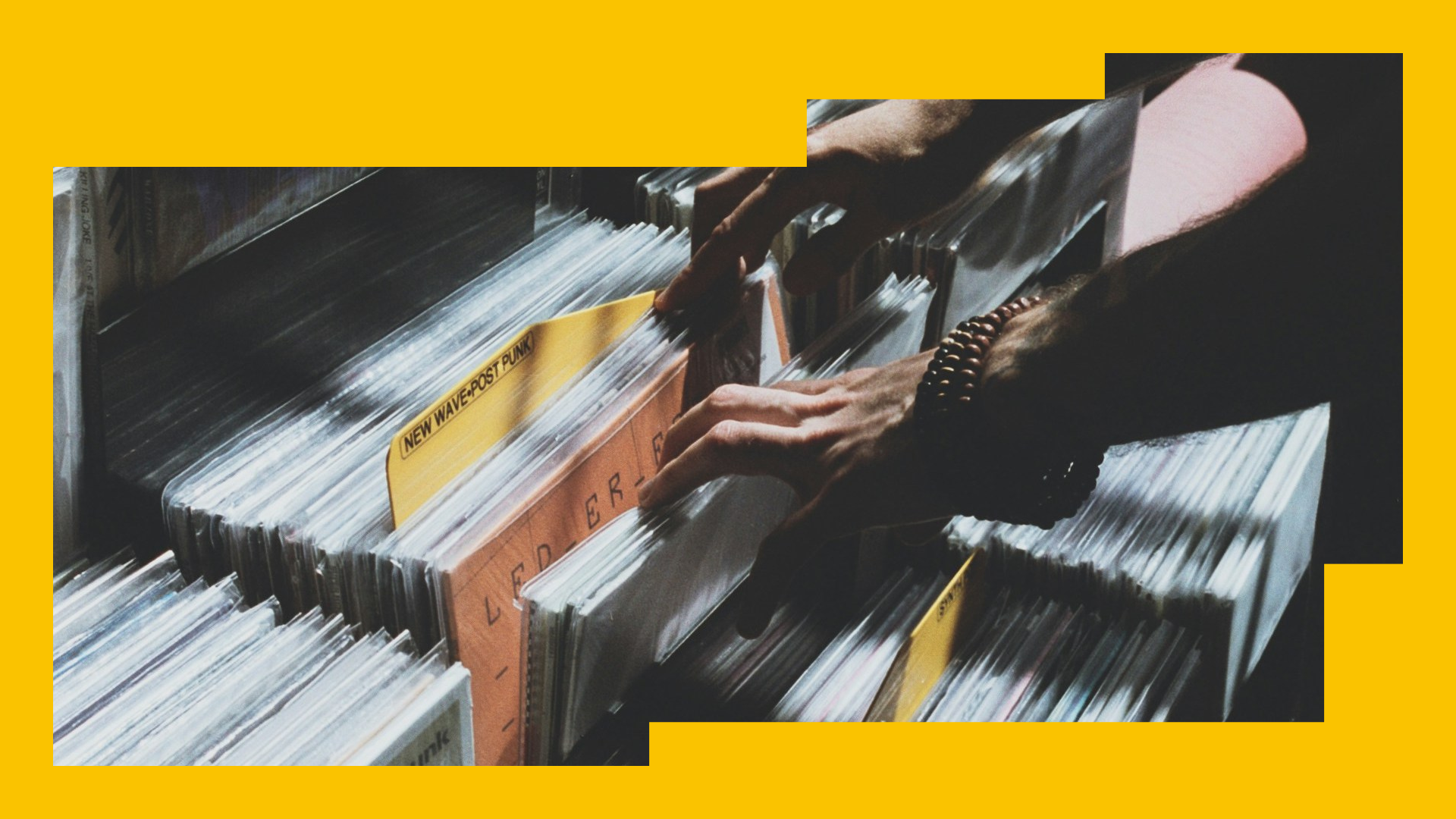
Photo by Florencia Viadana on Unsplash
From early implementations of digital audio technology in the 70s, through to the comprehensive toolkits of today, sampling is such an effective and enjoyable music production technique. By today, with our cloud-based sample browsing, the art has become a staple across pretty much all electronic music genres, and even makes an appearance in non-electronic works, too.
Think about that for a second… classic instrumental genres still live in the musical underground, appealing to niche fanbases, but most commercial music these days is electronic. And whether productions flip iconic and recognisable samples or not, chances are, most producers use at least some portion of audio samples across their productions from time to time (if not all the time). It can be hard to come up with New Ideas with Samples, but learning how they’ve changed music history will surely guide you on your way.
So, in this article, we’re taking time to appreciate and commemorate the art and practice of sampling, covering seven of the most iconic and legendary uses of the technique that revolutionised music production and performance. Without further chit-chat, let’s go!
1. The First Breakbeat: The Winstons’ ‘Amen Brother’ (1969)
Hopping straight into the time machine, we’re going right back to 1969 with The Winstons’ ‘Amen Brother’. This has to be worthy of the first mention due to the fact that this record alone pretty much became foundational DNA to many successive genres. This track is the most sampled in history – specifically, Gregory Coleman’s six second drum solo.
If that alone doesn’t qualify it for the top spot, let’s discuss further what makes it iconic. Coleman’s drum solo has been repurposed in just about every way imaginable: reversed, time-stretched (to many tempos), sliced and diced, layered, and more. This sole drum solo paved creative inspiration to all, showing samples can be reworked indefinitely as far as the mind can wonder, taking producers far past basic relooping.
2. Early Hip-Hop: Grandmaster Flash and DJ Cool Herc (Late 1970s)
Hip-hop has grown to become one of the most influential and popular genres of all time, and aside from the slick rhymes and lyrical storytelling that define modern rap, the instrumental side of it is fundamentally built on sampling. We can trace that all the way back to the 1970s, when a lonely DJ by the name Cool Herc had the bright idea of looping and extending breakbeats on his turntables.
Although it’s not considered sampling in the sense of repurposing a pre-existing work into a completely new release, it certainly is manipulating a pre-existing work in an ingenious way that would set the stage for other producers to further innovate. DJ Cool Herc’s breakbeat isolation and looping is the foundational essential of hip-hop, and it allowed breakdancers and rappers to attune themselves rhythmically, creating new ways to express themselves over music.
We couldn’t skip past this section without mentioning the more-than-legendary DJ Grandmaster Flash – DJ Cool Herc’s contemporary. This pioneer and hip-hop household name took Cool Herc’s ideas to the next level, instrumentalising turntables, interacting with them in never-before-seen ways. When you think of turntable scratching, backspinning and cutting, Grandmaster Flash is the originator. His ‘Quick Mix Theory’ also built upon Herc’s drum beat isolation, giving more space for rappers, and rap itself, to fuse lyrics to the instrumentals.
3. The First Mainstream Sampling Shockwave: The Art of Noise (1983–85)
The Fairlight CMI let The Art of Noise turn everyday sounds (car engines, breaking glass, sneezes) into melodic or rhythmic material. The tracks ‘Close (to the Edit)’ and ‘Beat Box’ took sampling to artistic depths that were unexplored at the time, which proved the technique could be used in mainstream Pop, not just underground experiments.
These works also evolved and normalised producers’ transitions into fully fledged sound designers, knighting them with more creative responsibility across the board, and paving the way for modern electronic Pop’s sonic character.
Really, upon listening to just the first 10 seconds of this track and hearing the creative use of a car ignition, you’ll hear for yourself the sampling magic. Listening to the rest of the track, and all of its sampled elements, will only drive the point home, as you appreciate this iconic record for its historical sampling significance.
Robert Fink went on to label the record officially as a sound collage – a beautiful tapestry of sampled sounds, compiled together in artistic fashion to create candy for your ears.
4. The Bomb Squad & Public Enemy (1987–1990)
Speaking of sound collages, next up on the list is The Bomb Squad and Public Enemy, who decided to take the concept to a whole new level, often compiling dozens of samples together across single tracks. Their album ‘It Takes a Nation of Millions’ utilises hundreds of loops throughout its playback and is one of the earliest examples of just how far the sample fever could be taken when pushed to the limits.
These two groups alone were responsible for pushing boundaries when it came to sampling, sparking controversial copyright-related debates about the technique, and if using others’ works to this extent could be considered ‘true art’ – whatever that means!
Alongside that, they combined the extreme sampling with confrontational political messaging and cultural commentary, pushing Hip-hop’s envelope to new, exciting places – both in terms of messaging and artistic sample usage. That’s exactly why these revolutionary groups, and their respective works, deserve a spot on this list.
5. Aphex Twin’s Surgical Micro-Sampling (1990s)
Now we’re getting into the nitty-gritty finer details of precise sampling experimentation. Where others were struggling to originate further using sampling techniques, Aphex Twin’s Richard D. James was occupied with tracks like ‘Come to Daddy’ and ‘Bucephalus Bouncing Ball’, where he exercised surgical sampling procedures like no-one else at the time.
Slicing granules of audio into minute fragments and reworking them in ingenious ways to create alien breakbeats and textures that were revolutionary, Aphex Twin showed that sampling doesn’t have to always be about repurposing a recognisable work in a track. He would certainly put to bed the debate that sampling isn’t ‘true art’. After all, if no-one can recognise the original sample, can it really be considered copying?
These iconic strides in sampling history would go on to inspire and influence IDM, glitch, experimental electronica, and basically every producer who decided they were too cool for mediocre 4/4 beats and the well-trodden path.
6. Daft Punk’s House Revival via Chic-Style Sampling (1997)
Daft Punk rose to prominence with their innovative production style and what some would call ‘repetitive-but-catchy’ club bangers. Most notably, their mainstream dance music by reinjecting the Disco and Funk DNA that was starting to dissipate. And how did they do that? You can probably guess; through sampling.
Tracks like ‘Da Funk’, ‘Around the World’, and later ‘Harder, Better, Faster, Stronger’ reintroduced the warmth, groove, and swagger of 70s/80s records, but in a way that felt sleek, modern, and club-ready. Their sound reminded producers that sampling wasn’t just about loops; it was about resurrecting entire musical lineages. Daft Punk alone pretty much kicked off the French House movement.
So why exactly was their sampling notable? They popularised a very specific sampling transformation style: lathering Funk/Disco grooves in aggressive filtering automation and pumping compression, creating the whooshing and breathing feel, signature in their music. ‘Harder, Better, Faster, Stronger’, for example, took a tiny Edwin Birdsong groove, chopped the synth line, and built an entirely new robotic anthem around it.
7. J Dilla’s Humanised Sample Chop Revolution (1998–2006)
J Dilla’s legacy is widely regarded as one of the most impactful and important in almost all nooks and crannies of the global Hip-hop community. And, for good reason… J Dilla managed to take the previously robotic and quantised feel of hip-hop sampling and breathe human life into it. Where other producers were content with the existing sound, Dilla was busy slicing samplings into irregular, off-kilter rhythms, focused on innovating.
And that innovation shows, and is appreciated and adored by many. He proved that sampling isn’t inherently mechanical. It can breathe. His approach changed hip-hop rhythm design, neo-soul production and left a permanent mark on how producers approach their beats. He forced others to step their game up and think deeper about the placement of every kick, snare and hi-hat hit (and beyond).
Of course, classic, mechanically quantised Boom-Bap still has its place, but J Dilla’s live MPC3000 drum playing, combined with carefully sliced soul and jazz samples, redefined what was possible.
Try out the Future of Sampling with Loopcloud
With access to over 4 million sounds, tagged management and some immensely powerful creativity features, Loopcloud is the modern way to become a better producer.
Keep Ideas Moving
Try Loopcloud free for 14 days. Cancel anytime.

Import your existing sounds · Works with your existing DAW · Setup in under 2 minutes