

Blog
Aaron Suiss Turns Loopcloud Samples Into His Own Sounds
18 Aug '2026
Aaron Suiss explains how focused Loopcloud searches leave Suiss more time to reshape samples and make every part fit his progressive production style.
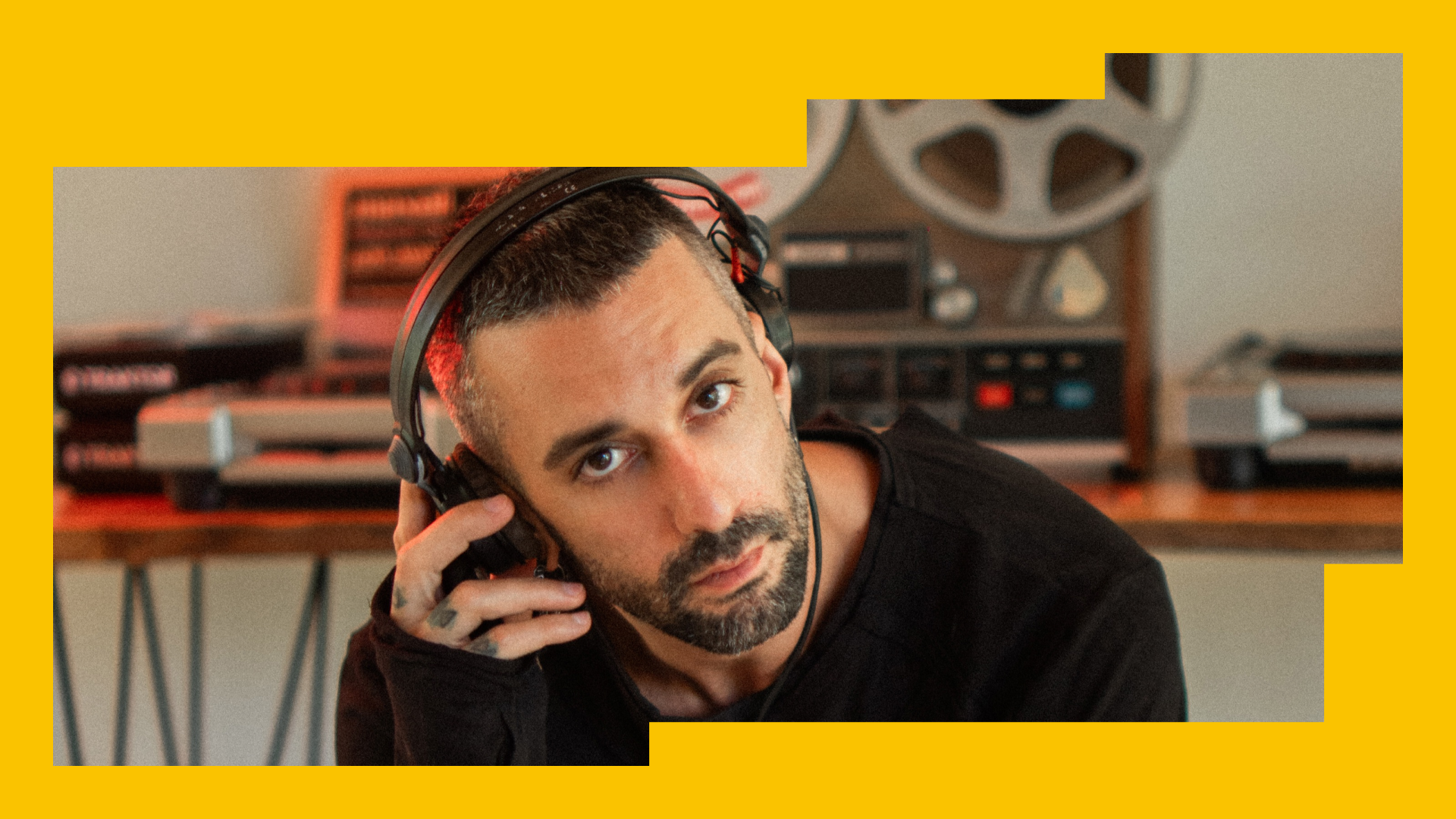
Aaron Suiss has spent the last several years building a catalog rooted in progressive house and melodic techno, with emotional intent present across his production choices. Raised around Washington, DC, and Baltimore before settling in Koh Phangan, Thailand, Suiss also works as A&R and label manager for Outta Limits Recordings. His 2019 release “Legend” reached No. 2 on Beatport’s Progressive House chart and helped establish the direction that continues across his current music. Insomniac’s artist biography covers this earlier period of his career.
His recent catalog output has expanded that foundation via collaborations with Einmusik and D-Nox, followed by the “Colors” EP with Citizen Kain in September 2025. His 2026 releases have included “Relayered” and “Self-Actualization” with Enzo Vood, among others. August also brought his “Purple Tooth / Linear Chains” EP with Matan Caspi, extending a catalog defined by collaboration and detailed production choices. Overall, it's safe to say he's on track to release a prolific amount of music this year alone, and we just had to figure out how he makes such high-quality tracks so efficiently.
In our discussion with him, Suiss explains how he searches for specific material without letting a large sample library dictate the music. He discusses turning percussion (something Chus & Ceballos always start with) into lead material, changing found sounds with rapid modulation, and committing processed samples to audio once the right result appears. He also explains why leaving an apparently finished production alone for several weeks can reveal a missing element that repeated listening had concealed.
Interview with Aaron Suiss
Who were you as a producer when you began “Self-Actualization,” and how had your thinking changed by the time it was ready for release?

This is an interesting question and not the easiest to answer because not much changed for me personally between producing the track and releasing it. Something I struggle with as a producer is constantly learning new techniques and developing my sound and skills.
With almost every track I make, I eventually reach a point where I hear something I could have done differently to improve the production. You never stop learning in music production, so it becomes an ongoing cycle of creating music and hearing it later with knowledge you did not have when you made it. You can always feel as though you could have done something better if you had known X, Y, or Z.
You have spoken before about the importance of stepping away from unfinished tracks. When did that distance help you make a better decision on “Self-Actualization”?
I think it is important to give the work time to breathe and return after a week without listening. When you hear something again with fresh ears, you can tell whether it is missing something or whether your mind was playing tricks on you. By fresh ears, I mean taking time away from that specific production before returning to it.
I actually created this track and initially thought it was finished. I then left it for a few months and kept returning to it. Eventually, I felt something was missing in the midrange, so I added a sawtooth mid-bass. That opened up and filled out the track.
When you search inside Loopcloud, which terms, tags, or musical details tend to lead you toward material you can develop?
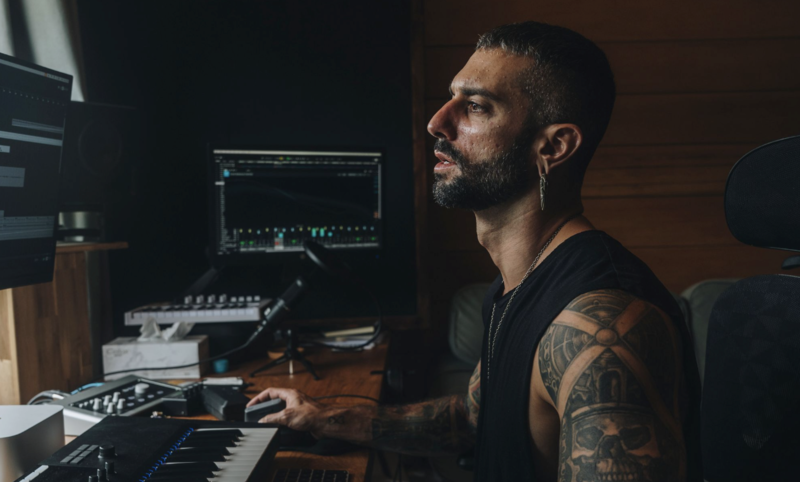
It depends on what I am looking for because I can develop an idea from many different elements. Sometimes I find a percussion element and turn the loop into a lead with glitch processing. I might also add delay or use ShaperBox.
If I am searching for a lead and find something I like, I may use a ring modulator or add volume automation at a 1/32 rate to change its character. I do not want it to sound like something another producer could find by searching the same Loopcloud library.
I also like adding a 1/32 or 1/16 LFO to a vocal or vocal pad because it creates a hypnotic effect. Ideally, I want to create sounds people have not heard before. I often search for terms such as “synth lead” and “mixed percussion.” I also search for “vocal,” and those terms usually help me find something that can open up the track.
How do you stop a large sample library from deciding the direction of the track for you?
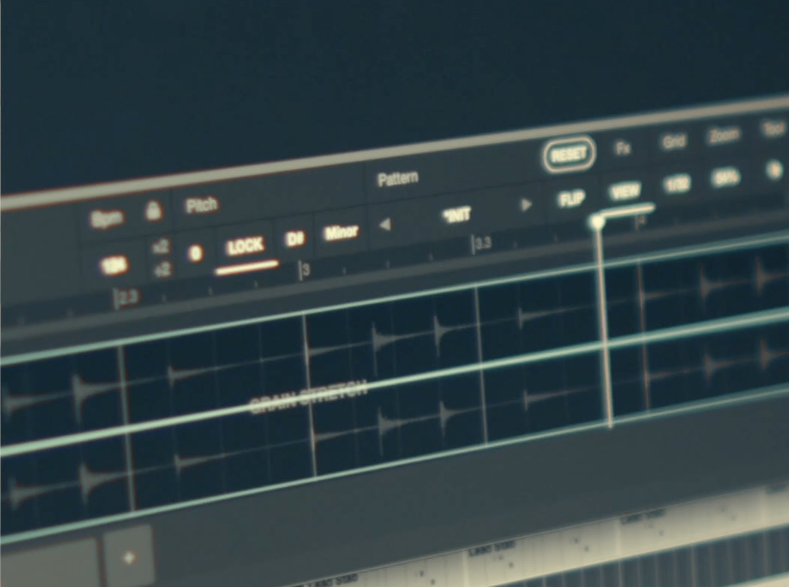
Most of the time, I do my best to write my own elements. I even like to write the drums because I use a lot of automation, and I prefer automating the original element before processing it afterward.
I do not feel that having a large sample library decides the direction of my music. It helps because I usually search only for what I need. There have been times when I found a sample that changed the entire direction of a track, although that does not happen often.
When do you commit edited samples to audio, and why do you prefer committing at that point?
I commit an edited sample to audio once it has enough processing and I have achieved the result I wanted. If I feel finished with that specific element, I render it.
I also render when modulation or processing keeps changing and I want to capture one exact version. Converting it to audio preserves that result and lets me continue working with a fixed recording.
What would you tell a producer who opens Loopcloud with a blank project and starts browsing without knowing what they need?
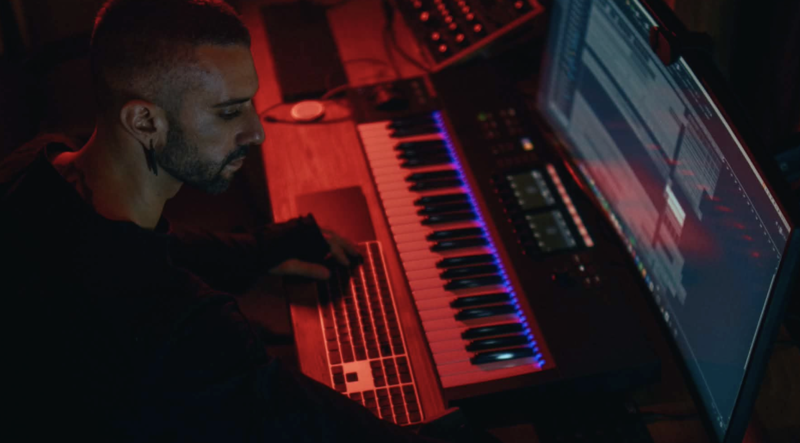
I would begin by building a groove that moves you. Once you find the right feeling there, you can begin developing the soul of the track with synths and leads that speak to one another.
I think it is important to establish the foundation before adding too many elements over it. Start with what moves you, then move toward what makes you feel something.
So What's The Big Takeaway?
Suiss’s process points to one main lesson: access to a large sample catalog does not remove the need for intent. He enters a search with a specific musical job in mind, changes what he finds, and stops browsing once the part serves the production. He also accepts that an apparently finished track may need time away before its missing element becomes obvious. This balance between experimentation and commitment keeps the library available without letting it control the music.
Loopcloud supports that process by letting Suiss search direct terms such as “mixed percussion” or “synth lead” instead of opening unrelated folders. Once he finds suitable source material, he can spend his time changing its role with automation and modulation. Loopcloud supplies an organized catalog that keeps the search connected to the production, and Suiss determines what the finished part becomes. So try it out for yourself completely free for 14 days right here.