

Blog
How Just Her Keeps Sample Libraries Manageable
16 Sep '2026
Just Her explains how Loopcloud helps her find and reshape samples while turning early drum grooves into completed melodic house tracks in Logic Pro.
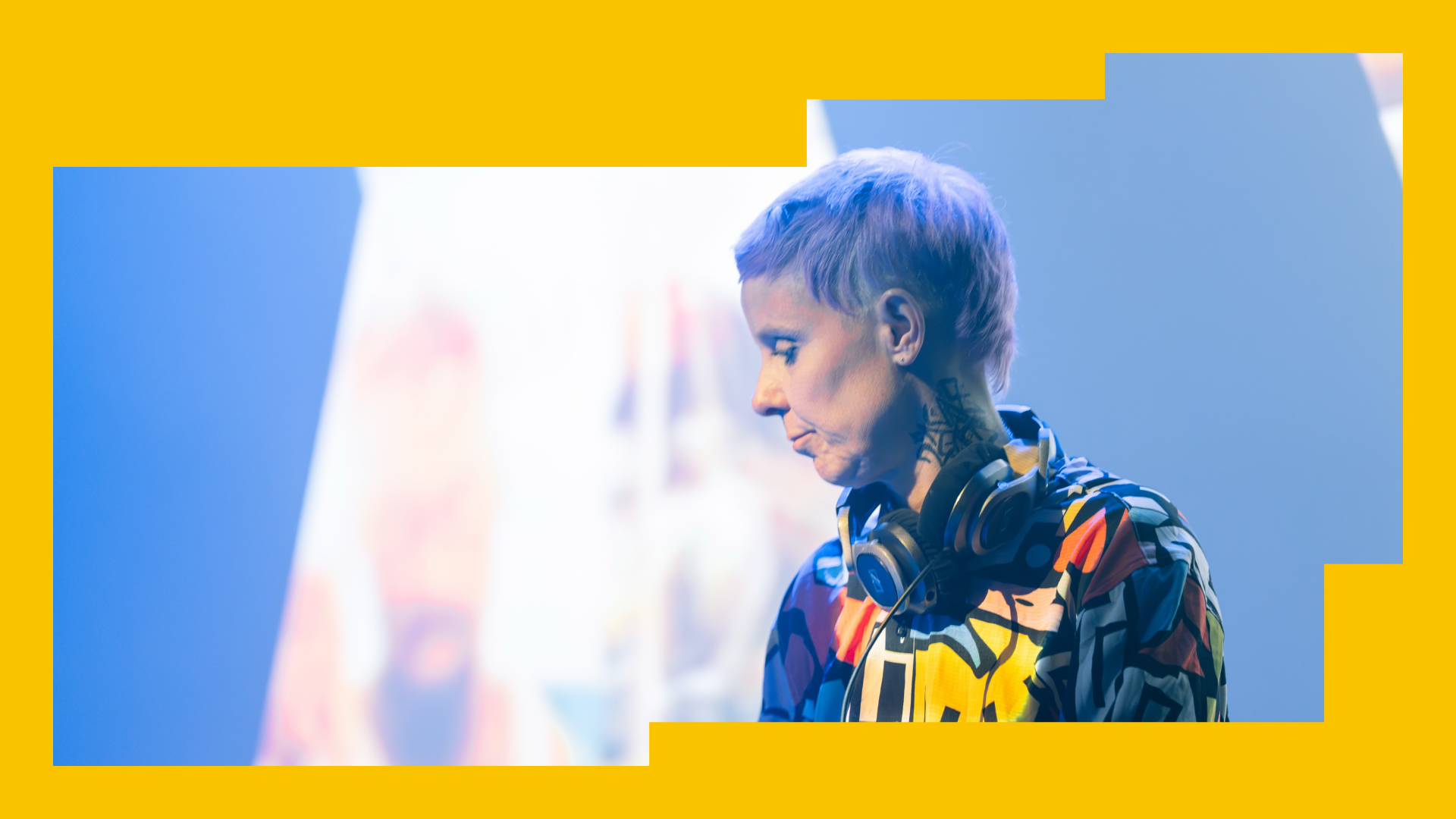
Claire Spooner-Loveday has built Just Her around productions that connect melodic detail with club function. After studying Creative Music Production, she became a Music Technology lecturer and formed Him_Self_Her in 2012. Her solo catalog includes releases on Crosstown Rebels and Anjunadeep, alongside work for Global Underground and Last Night on Earth. She also runs Constant Circles as an outlet for music and contemporary visual art.
Her experience informs how she uses samples in every single one of her projects and every time she cracks open her DAW.
Just Her has collected close to 20 years of material from commercial packs and personal field recordings, which can create too many options when an empty Logic project already feels difficult to begin. Loopcloud helps her audition material in sync with the DAW and hear each sample in context before committing to it. That speed becomes especially important when creative block interrupts the writing process.
The discussion with her below describes a flexible production method in which samples may start the writing, then disappear from the completed track. A vocal can become a rhythmic part inside Ultrabeat, and a melodic phrase may be recreated with hardware. Loopcloud shortens the search while keeping a large archive organized, leaving Just Her free to concentrate on processing and arrangement.
What role do samples play in helping you start an idea when the track is still in its earliest stage?
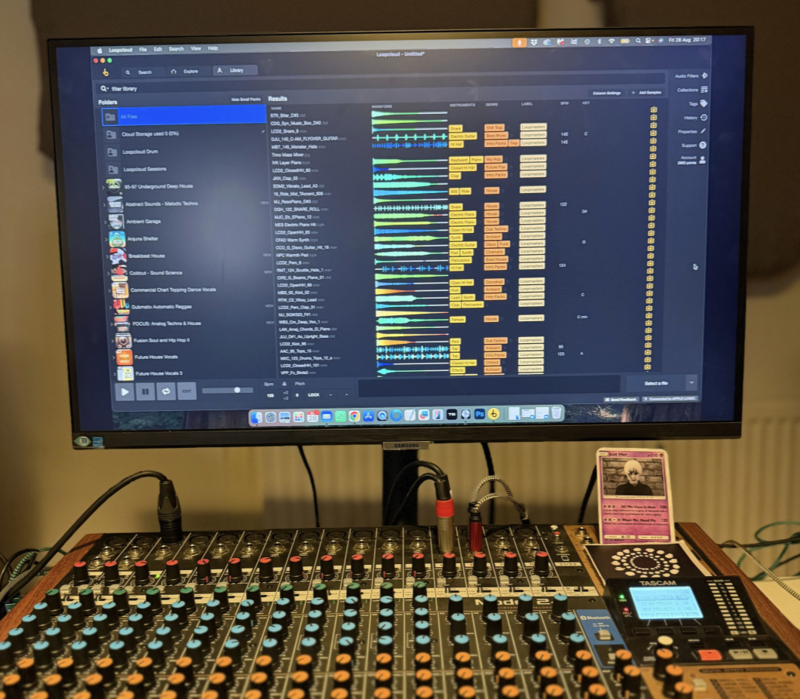
Browsing samples until a sound suggests an idea is something I do all the time. It helps when I am dealing with creative block or anxiety around starting an empty project, which I genuinely struggle with.
Dropping a vocal hook or drum groove into Logic often gives me enough material to begin writing. A synth melody can serve the same role. The original sample may never appear in the finished track, or it may be processed and fully rearranged as the idea develops.
If it is a melodic element, I sometimes recreate it using hardware or a plug-in. Loopcloud is brilliant for finding that initial idea quickly without interrupting my concentration.
When you are working on melodic house or deeper club-focused material, which sample categories usually help you build the first sketch?

For club-focused material, I almost always start with a drum groove, so drum samples are essential. Most of the time, I create a drag-and-drop kit in Ultrabeat and load it with interesting hits. Yes, I am still using Ultrabeat!
I then jam until I find a groove that feels right. From there, I audition percussion loops and textures. I may also check vocal fragments or melodic elements to hear what complements the groove.
Auditioning sounds in Loopcloud in sync with the DAW is a major advantage because the same process can be inconsistent in Logic. It lets me hear each sample in context and identify the material I want to chop into the project.
Do you have any sample-processing techniques that have become regular parts of your studio process?
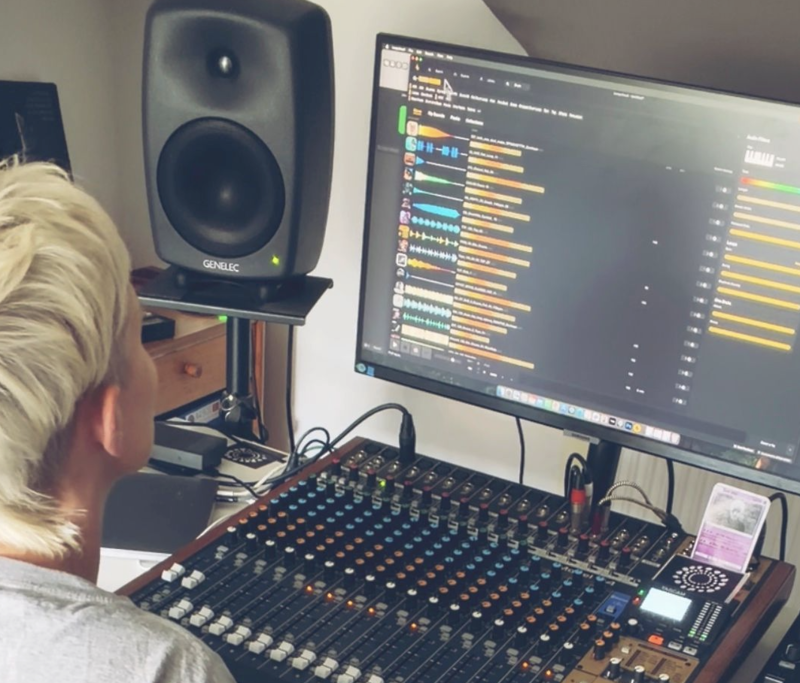
I have a few effects chains that I return to, particularly for swirling vocal effects and parallel processing. I generally avoid relying too heavily on templates or saved channel settings because I prefer originality and spontaneity.
One method I love is loading unexpected samples, especially vocals, into Ultrabeat and triggering them like drums. I then use envelopes and modulation to create glitchy rhythmic patterns.I also experiment with pitch shifting and time stretching before processing samples with reverb or delay. For example, I may send a long reverb to an aux channel pitched up by seven semitones. After rendering that return as audio, I reverse or resample it to create harmonic texture in a melodic track.
Which parts of your tracks are usually sample-based, and which do you prefer to write with synths or drum machines?
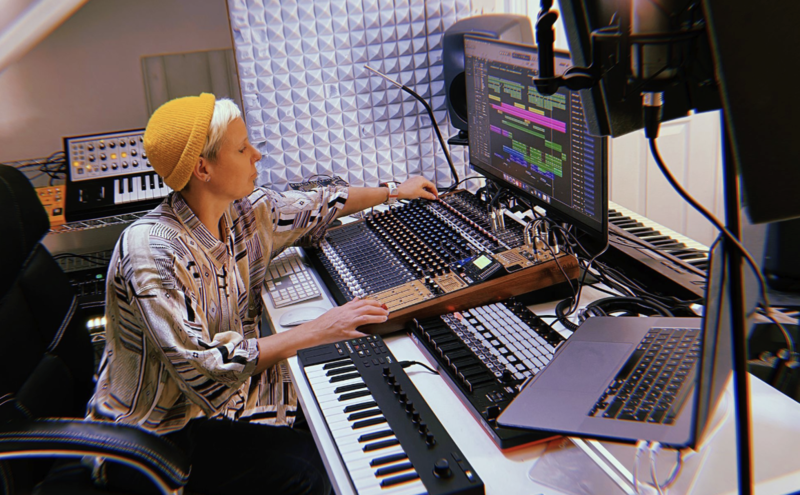
There is no specific part of a project that I reserve for samples or synths. The choice depends on how the idea developed and what I feel is missing. Sometimes a sample forms the foundation of the entire track. In other projects, I build the drum groove from individual hits or reshape loops into new patterns.
For arpeggiated synth lines, I usually reach for hardware or VSTs because I enjoy having detailed control over the automation and modulation. Similar motion can still come from chopped samples with filter automation and additional processing. Loopcloud gives me the freedom to move among these approaches without assigning a fixed role to each sample.
When you are producing for labels serving deeper, melodic, or underground-focused audiences, how much do you consider sample choice as part of the record’s identity?
Sample choice can shape a track’s identity, particularly for deeper or underground-focused audiences. The texture and character of a sample can determine much of the atmosphere.
I still try to avoid overthinking it because forcing a project toward a predefined aesthetic can limit the writing. I prefer to follow the feeling of the music and allow its identity to develop. I decide where it belongs once that identity is established.
Loopcloud helps here because its large library makes it easy to test new directions until one fits the track.
What advice would you give producers who collect a lot of samples and struggle to turn them into finished tracks?
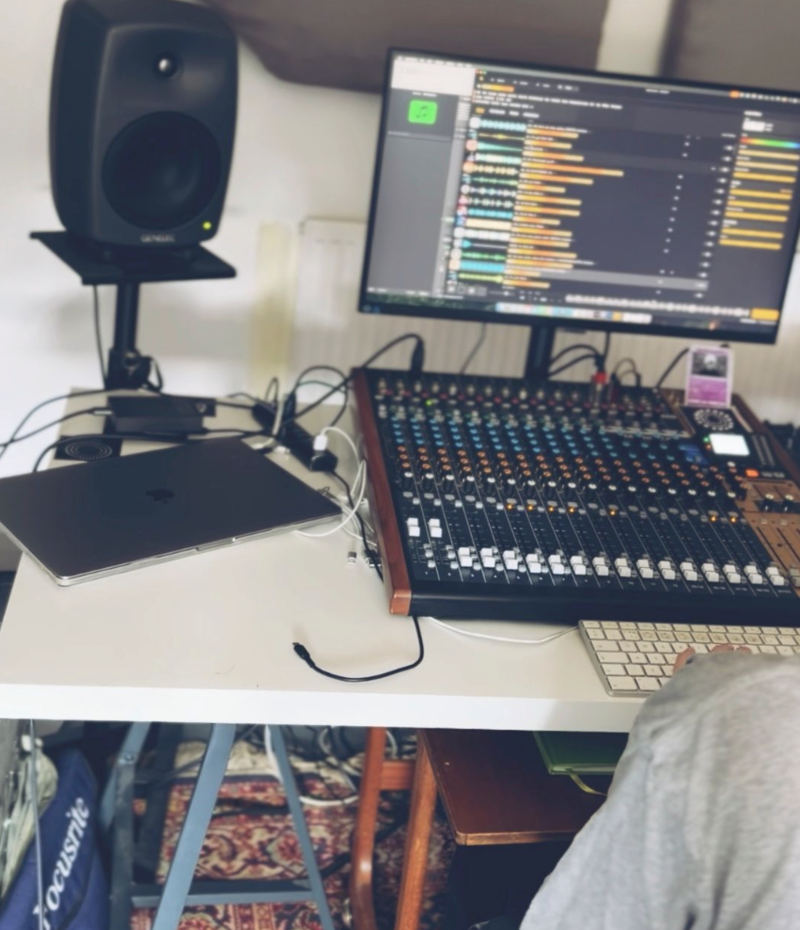
I know firsthand that a huge sample collection can become overwhelming and encourage endless browsing. My archive includes close to 20 years of commercial packs and personal recordings.
Spending time sorting and categorizing the material helps. Loopcloud handles much of that work by placing relevant samples in one searchable location. This saves time when I am trying to remain focused on writing.
My main advice is to build one full loop containing the sounds and energy you want in the busiest section of the track. Once that works, move backward across the arrangement and remove sounds gradually to create the earlier sections.
The Biggest Lesson Here
For Just Her, the first sample may serve a temporary role and its contribution comes from the idea it produces, even when the original file gets replaced. Her editing methods keep that material flexible and usable even as the project and the central idea behind it change beneath her. A vocal can become a rhythmic part in Ultrabeat, and a melodic phrase can be recreated on hardware once it provides the initial direction.
Loopcloud addresses two problems she identifies: difficulty beginning and overload from a large archive. DAW-synced auditioning lets her judge samples inside the project, while its organization keeps almost two decades of material searchable. Once a full loop contains the intended energy, her backward arrangement method provides a direct route toward completion.
This keeps sample discovery connected to finished music.