


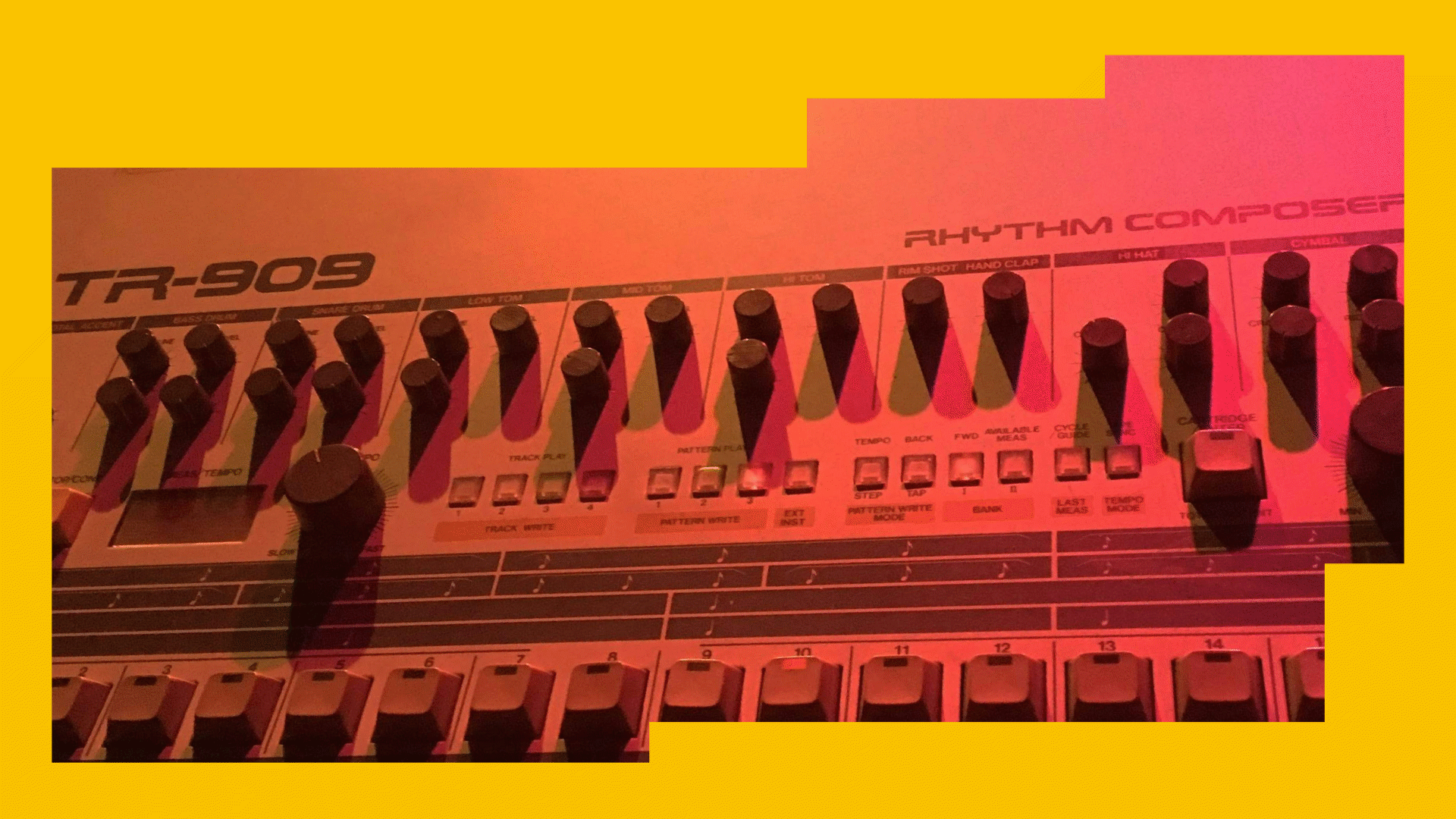
What is 909 Day?
Celebrate the GOAT of Grooveboxes, and discover what made Roland’s TR-909 Rhythm Composer an influence on whole genres for decades on end
Photo by Abhay Rautela on Unsplash
For electronic music producers, there reaches a point in many tracks where a ride cymbal is needed. At that point, a process begins that is repeated so often it could be considered a ritual: a good 10 to 15 minutes spent skimming through dozens of ride samples in a typical collection, before inevitably settling on the same trusty sample from the TR-909 Rhythm Composer.
Producers often promise themselves they’ll mix things up and try something new, but always end up coming back to that good old 909 ride. Why? Because it’s iconic, it sounds great and most importantly, it cuts through the mix like a knife through butter.
It’s not just one producer who’s enamoured with the 909; everyone from Aphex Twin to Madonna has had some kind of run in with the TR-808’s rowdier little brother over the years. Whilst it didn't quite infiltrate the highest echelons of pop culture in quite the same way, it’s no less popular or influential.
If you ever want to see what this baby can do in the hands of an absolute master of the craft, look no further than this video with Jeff ‘The Wizard’ Mills - just don’t forget to pick your jaw up off the floor afterwards.
So to celebrate this most hallowed of dates, the 9th of September, here’s a rundown of some of the most commonly asked questions about this legendary bit of kit.
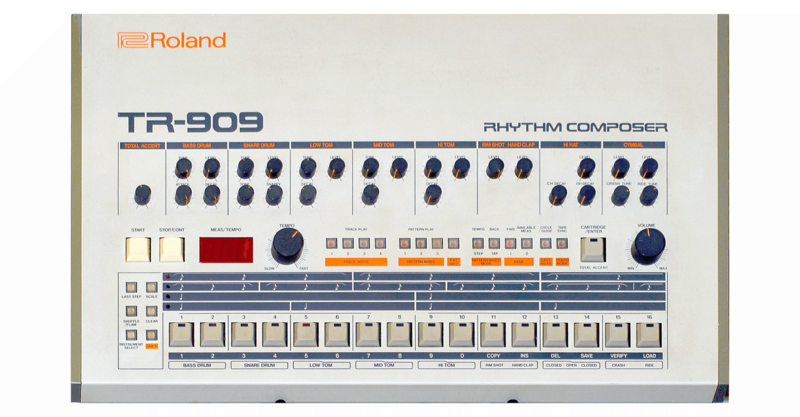
What is the Roland TR-909 Rhythm Composer?
The 909 - as it’s most commonly known - is what you’d refer to as a drum machine, but Roland themselves opted for ‘rhythm composer’ moniker to set it apart from a myriad of lower-end consumer products that occupied the market at that time.
Credit: Brandon Daniel
Such units, aimed at keyboard or organ players, were far less flexible, and shipped with fixed drum patterns (say, Bossa Nova or Waltz) to play along to. Roland’s rhythm composers on the other hand offered the ability to sequence, edit, and compose entire custom rhythm tracks step-by-step.
Who used the 909?
At first? Well, nobody, actually.
Much like the 808, the 909 was initially a bit of a flop for a variety of reasons. It didn’t come cheap, and it didn’t sound real enough to warrant a place in a high-end studio. It was quickly consigned to thrift stores around the US, before Roland eventually ceased production altogether after producing just 10,000 units. .
Then along came techno and acid house, and everything changed. The 909 began to find its rhythm - pun very much intended - and those 10,000 units skyrocketed in price. It found its way into bedroom studios across the world, and before long it was being used to lay the foundations of a whole new musical legacy. It became ubiquitous in Detroit Techno, Acid House, and even Pop.
Why was the 909 so popular?
Starting with the obvious: it sounds great. Even to this day, its punchy, crisp snares and bright hats just hit differently. And its snappy kick can cut through the mix in a way that the boomy 808 sub just didn’t do.
There’s also the fact that the 909 is simply an incredibly expressive instrument. Jeff Mills said it best: “The way that the machine was made, it’s possible to actually play the machine, not just program it - and if you’re really good, to play it almost as if you’re a live drummer playing a drum kit.”
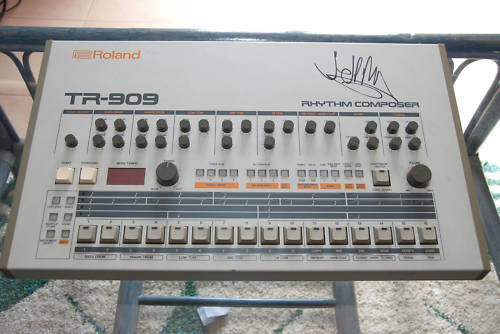
909 units signed by Jeff Mills himself often reach astronomical fees in online auctions.
Credit: Matrixsynth
It’s possible to tweak individual drum hits on the fly with meticulous precision by pitching them up and down and tweaking the attack/decay envelopes. Then there’s step sequencing: pressing a step twice made the button light up brighter, applying a global dynamic accent to that step. This adds human-like ghost notes and emphasis without needing complex velocity routing. It’s also easy to apply swing to an entire groove with relative ease.
The 909 was also one of the first drum machines to implement MIDI, allowing it to function as a master clock and trigger other hardware such as synthesizers. This made it perfect for live performances, and it was often the foundational underpinning of many studios of the time, with its drums providing the timing for everything else
How does the 909 work?
Unlike the purely analogue 808, the 909 is a hybrid beast: it operates through a combination of analog sound generation and digital sample playback. Some hits, such as the kick, snare and toms use internal oscillators such as sine or noise generators. Then on the high end, rides and cymbals utilise a digital sample engine, which Roland opted as they felt samples added realism.
The step sequencer is a traditional 16 step button design, with added features like shuffle, to make pattern playback feel a bit less machine-like, whilst still sounding decidedly ‘electronic’.
What are some alternatives to the 909?
Can’t afford the original 909? Not many can. Luckily these days it’s one of the most emulated pieces of electronic equipment out there, and there’s no shortage of ways to get your hands on it.
Credit: Behringer
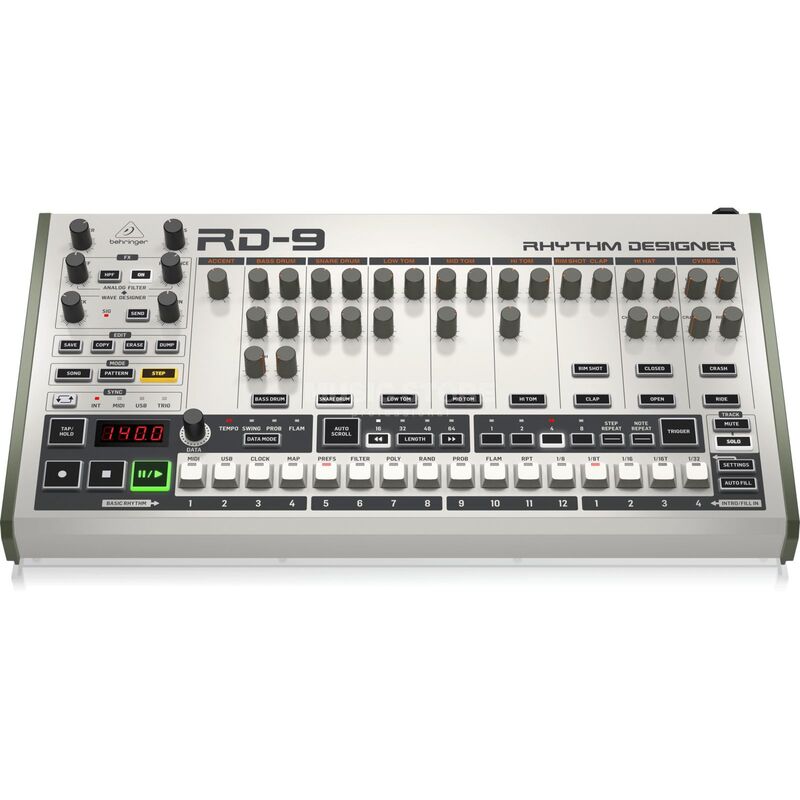
If hardware is your bag, Behringer’s RD-9 clone both looks and sounds remarkably close to the real thing. There’s also Roland’s very own compact recreation of their original baby, the TR-09. It offers the same window-rattling sound profile as the OG, but offers a few new tricks under the hood such as an onboard compressor.
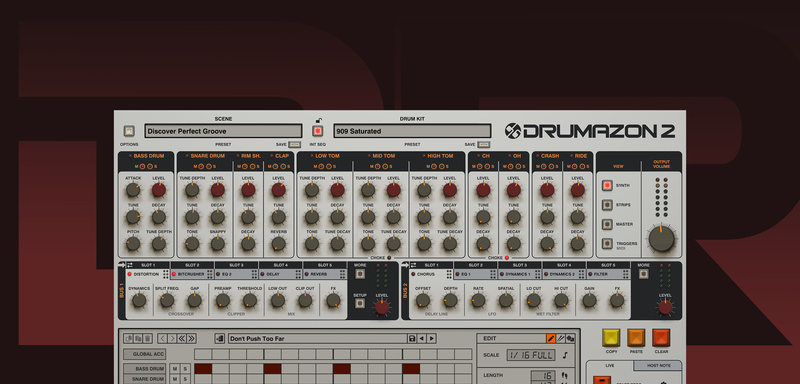
In the software world, the D16 Group Drumazon 2 offers a powerful third-party emulation that expands on the original synth engine with built-in mastering processors and FX.
Stock DAW kits such as Ableton Live, Logic Pro, and FL Studio also all include built-in 909 racks, mapping essential parameters directly to macro controls to give similar levels of control in the box.
Prefer to go down the loop route? We’ve got you covered. Loopcloud’s own 909 Loops and Samples provide every single flavour of 909 goodness you can think of. From clean individual hits to loops that’ve been mangled and twisted to within an inch of their life.
Keep Ideas Moving
Try Loopcloud free for 14 days. Cancel anytime.

Import your existing sounds · Works with your existing DAW · Setup in under 2 minutes