

Blog
L’CORE on Loopcloud, Poco Loco, and Choosing Samples That Serve the Groove
8 Oct '2026
L’CORE explains how Loopcloud helped shape Poco Loco with Eran Hersh and NATKO, from percussion choices to faster sample decisions.

L’CORE’s latest release, “Poco Loco,” brings him together with Eran Hersh and NATKO for a Latin bass house record built around percussion, movement, and a direct club function. Released on L’CORE’s own Late Exit imprint, the track pulls from European four-on-the-floor pressure, Moombahton-inspired rhythms, and Spanish vocal energy, though the result works because the parts feel connected rather than stacked on top of each other. That balance is also what makes the track a clean entry point for a conversation about sample selection.
The record started with the groove, and that detail matters because percussion carries much of the track’s identity before the arrangement fully opens up. L’CORE was doing more than chasing samples by label tags alone, and he wasn't trying to force Latin or Moombahton references into the production just because those words matched the brief. He listened for parts that served different roles: some creating movement, others adding accents, and others bringing the human feel the record needed.
Loopcloud fits that process because early decisions move faster when collaborators can hear a sound inside the project instead of guessing how it might work later. A sample can be tested at the right tempo and in the right context, which helps the room decide whether it supports the kick, bass, and percussion or competes with them. In our discussion below, L’CORE explains how “Poco Loco” took shape, how he thinks about percussion searches, and why choosing fewer of the right sounds can define a record more clearly than adding extra layers, and you can tap into similar workflows completely for free through our 14-day trial of Loopcloud.
What was the first sample or recorded element that gave “Poco Loco” its direction?

“Poco Loco” really started with the groove. Once we found the right combination of percussion and that Latin feel, we knew the track already had a personality, and we did not want to overload it.
We wanted something physical and dancefloor-driven, though also a little playful and unexpected. From there, the bass and vocal elements started falling into place naturally. For me, if the groove makes you move before there is even a real arrangement, you know you have the foundation of a track.
The track combines Latin percussion, Moombahton-inspired rhythms, and a four-on-the-floor foundation. How did you choose samples that connected those elements naturally?
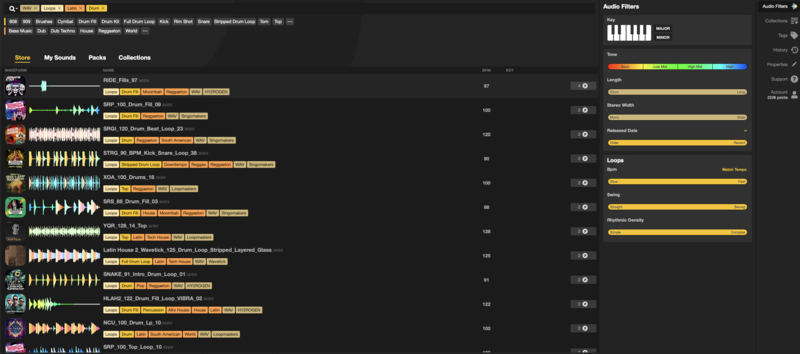
We were not choosing samples just because they were labeled “Latin” or “Moombahton.” We were looking for elements that sat naturally in the pocket of the groove, with each one serving a different purpose.
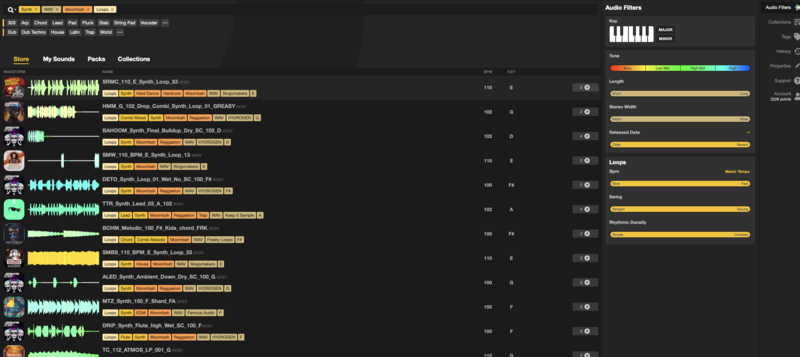
Some created movement, some added accents, and others brought the human feel the track needed. A sample can sound incredible on its own, though if it fights the kick or bass, it does not belong in the record. The goal was to make all those influences feel like one language rather than different genres layered on top of each other.
When you are searching for percussion, do you search by instrument name, geographic region, genre, or by the role it needs to play in the track?
I usually start with the role the sound needs to play. I think in terms of movement, tension, swing, and space rather than the name of a specific instrument.
Sometimes searching by region or genre can lead you to something you would not normally consider, and that can open up a completely new direction. Once I put it into the project, I do not really care where it came from anymore. I care about what it does to the groove. If it changes the way the track moves, then it is probably doing something right.
Loopcloud lets you audition samples directly against an active project. How can that improve decision-making during the early stages of a collaboration?
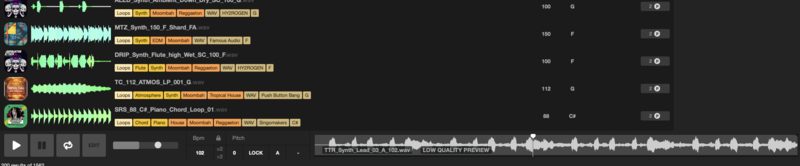
In a collaboration, momentum is everything. Being able to hear a sample immediately inside the project, at the right tempo and in the right context, means everyone can react to the same idea instead of imagining how it might work.
It makes decisions much faster and more instinctive. Instead of interrupting the creative flow to download, edit, and organize every idea, you can test it in real time and keep moving. Especially at the beginning of a track, that speed can be the difference between capturing a moment of inspiration and losing it.
What advice would you give producers who save hundreds of samples though struggle to choose the few that actually belong in the finished track?

Stop asking which sample is the best and start asking which sample the track actually needs.
Those are two completely different questions.
If you already have an element doing a certain job, adding another sound doing almost the same thing usually makes each part weaker. I like making decisions quickly, then testing whether the track still works when I remove things. A lot of the time, the identity of a record comes from how few of the right elements are left.
After finishing “Poco Loco,” did each collaborator come away with a different approach to sample selection, vocal processing, or percussion programming?

One of the best parts of collaboration is seeing how other people make decisions. On “Poco Loco,” each of us brought slightly different instincts and tastes, and that made all of us listen to the details differently.
For me, it reinforced the idea that you do not need to add a lot to create energy. Sometimes a small change in a vocal, percussion element, or the use of space can completely change the feeling of a track. You also learn when to fight for an idea and when to let somebody else take it somewhere you would not have thought of.
That is something I have carried into the productions that came after it.
Final Thoughts After Chatting With L’CORE
The main takeaway from L’CORE’s approach is that sample selection should serve the needs of the track, not the producer's ego.
“Poco Loco” works because the percussion, vocal parts, and bass all have a clear job, and the production does not keep adding sounds once the groove already has enough identity. That is an important point for producers who keep saving hundreds of samples, then struggle to decide which ones belong in the final version.
Loopcloud can help solve that issue by letting producers test ideas directly against an active project before they commit to them. Instead of downloading every possible option, organizing files later, and hoping the sound fits once it reaches the session, producers can audition samples in context and make faster decisions with the track playing. That helps collaborations keep moving, and it gives each sample a simple test: does it improve the groove, support the idea, and earn its place in the record?