


Beyond the MPC – The State of Modern Samplers and Sampling Tools
What’s new in the world of sampling, and where next for the artform and the music we make with samples? Here’s the state of modern sampling technology
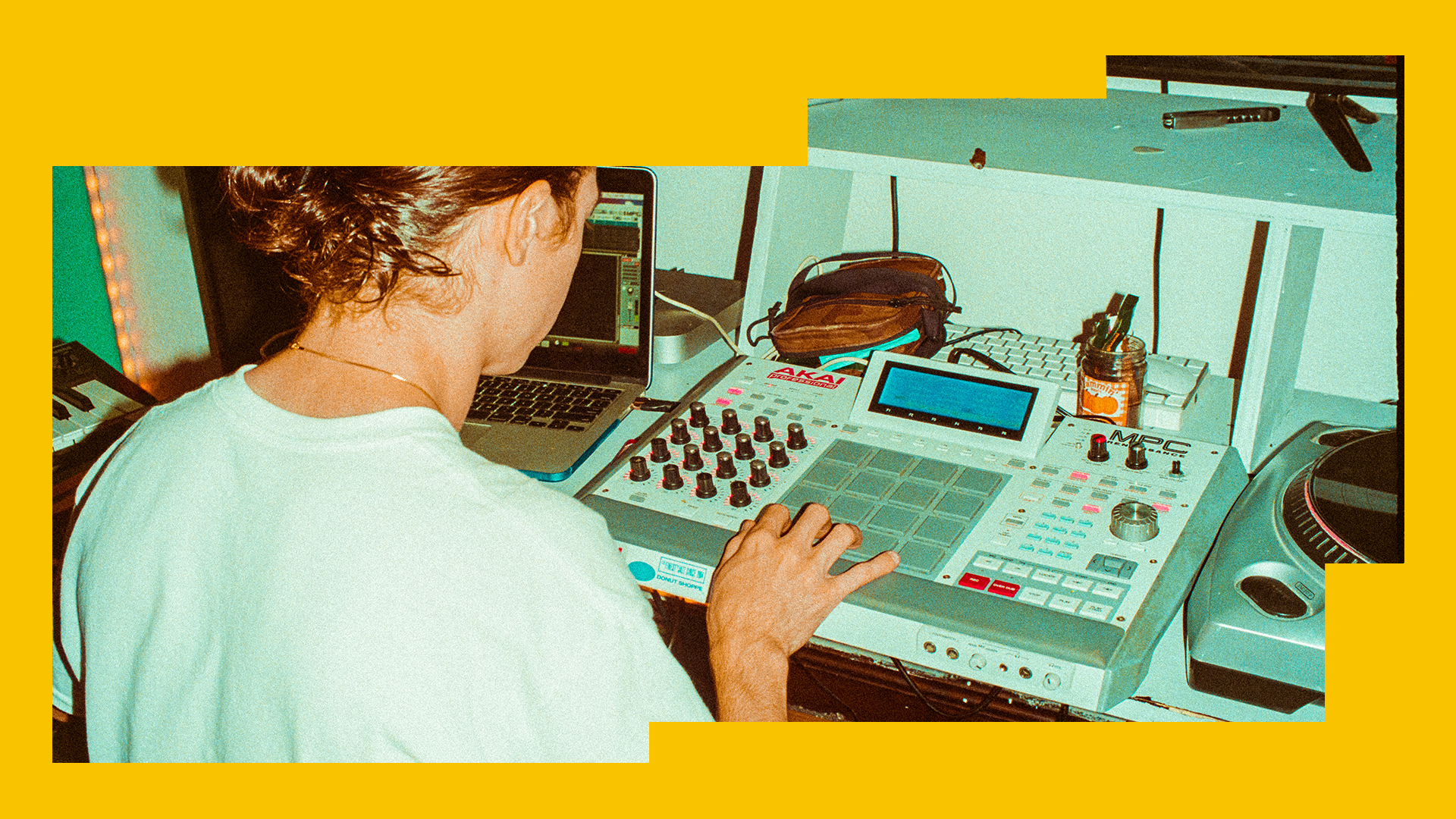
Photo by Brian Lundquist on Unsplash
Sampling is an artform in itself. From the first uses of sampling in music to today’s granular plugins, taking snatches of audio – small or long – and using them to build a new piece of music with a new intention has an artistic credibility of its own. Old-school sampling is still having an effect in music, as modern plugins can easily recreate the vibe of early samplers like the MPC-60 or Emu SP-1200.
But it’s not all about the vintage feel – there are still developers and manufacturers pushing the sampling game forward, creating killer tools for producers who push the envelope rather than reliving old ideas.
In this article, we’ll take a look at the trends in sampling and samplers that have been happening over recent years, giving you a better idea of what might be coming next.
It’s Less About the Samples Themselves
Sampling is becoming less about the samples themselves and more about what the unit can do with the source material – whether it’s a hardware or software sampler unit. How far can the sound be pushed, deconstructed, reconstructed and turned into something new?
Tools like XLN Audio Life take the automatic processing of samples to a whole new level. Whole beats are generated from source material automatically, removing the tedious process of chopping up and rearranging samples by providing a new “happy accident” workflow. This means you can take a real world recording in your kitchen, drop it into Life and have a working musical loop in seconds.
Randomisation and machine learning algorithms are breaking out of “random starting point” or “random pitch” to change the way we work across the board. In the realm of samplers, this means automatic beat generation, multi-parameter randomization, per-step variation and constrained randomness for control.
With editing, slicing and modulation taken care of by the sampler itself, it shifts the focus: the task is now with the producer to focus more on recording great source material. You can use the sampler as an idea generator, kickstarting a new song with instant ideas instead of getting stuck in the process.
Human Feel is Taking the Lead
Rhythm is becoming more fluid and probabilistic instead of rigid and fixed. Samplers now aim to emulate human feel or complex articulation rather than providing the robotic sound that gave them their iconic status as electronic instruments in the first place.
Creating human feel in the digital realm is a tricky task, made easier by tools like Klevgrand Oneshot which now includes a brand new motion engine for creating evolving movement inside the sampler. It uses a familiar envelope style display to control the “intensity” of continuous sounds, controlling the amplitude, density or trigger behaviour and articulation of a sample. This enables you as the producer to bring sounds to life in a way that suits your specific project. For example, you could set the movement of a brush snare to match a pre-existing percussion loop or create water movement that matches your video content.
Klevgrand takes their focus on gesture one step further for iOS users, with the inclusion of a companion app that allows you to control motion sounds using your iPhones accelerometer, turning physical gesture into expression. This is great for users who want to get out of the box without breaking the bank!
Instant Recording and Sample Syncing
Sampling is becoming inclusive of human feel more than ever, with tools like the Teenage Engineering EP-40 including an optional built in mic for instant sampling and XLN Audio Life including an instant sync field recorder app. This enables you as the producer to add a personalised layer of expression by recording your own samples and sounds, without massively disrupting the creative process.
There’s a bit of juxtaposition in the simultaneous shift towards removing tedious processes with AI and enabling more personal creative expression through companion apps and recording features.
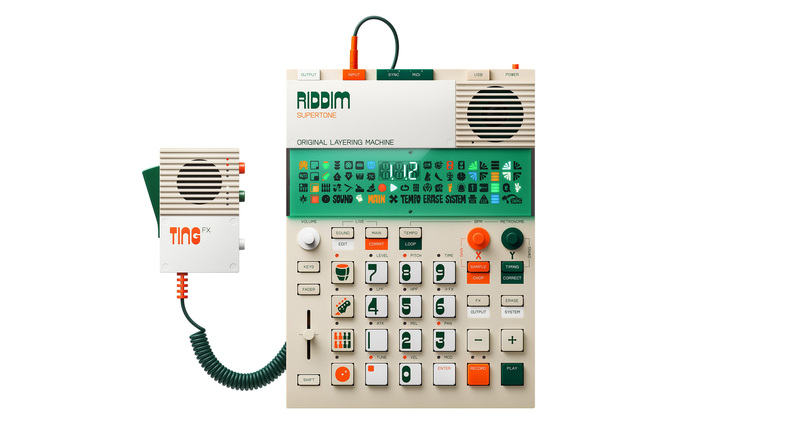
State of the art hardware samplers such as the Elektron Digitakt II are also embracing the shift towards humanisation by including features like Microtiming and Euclidean sequencing, allowing you to push or pull the timing off grid or generate complex rhythmic sequences that mimic those of African and Latin music.
Complexity is King
Granular synthesis remains at the forefront of deconstructing samples, breaking them down into the smallest pieces possible and reconstructing them into something new. Dawesome's NOVUM takes sampling with granular engines to a whole new level using their unique spectral import system.
When importing a new sample, NOVUM separates the audio into six different layers, with each representing a different part of the source audio. This means you can work individually with the body, texture or transient parts of any sound you import. Separating these elements gives you full creative control and means you can create completely new sonics through precise editing or the combination of layers from different sources - creating brand new hybrid instruments.
Have you ever wanted to hear a guitar with the timbre of a trumpet? Well, alongside a complex modulation system and built in FX, NOVUM also offers Cross-Synthesis; allowing you to leverage spectral processing to easily combine sonic elements or whole sounds together. These kind of features offer state of the art advancements in sampling technology perfect for the producer who wants to take their sampling game to the experimental level.
Modulation Madnes
With the rise of complex modulation systems seen in flagship versions of Ableton Live and Bitwig Studio, gone are the days of headache-inducing, overly complex routing systems or “no-visual” modulators that are hard to fully understand. One state-of-the-art sampler plugin that’s putting modulation at the forefront of their sampler experience is MAP Audio’s PAM.
This Pattern-Based Audio Mapping System or PAM for short boasts a secondary layer of control behind every knob, step and cell in the sampler. They’ve combined pre-existing well-established modulation controls such as LFO generators with curve editors, parameter sequencers, randomizers, an XY Pad and much more, with most available at the simple right click of any control.
Tools like PAM make it hard to avoid complexity, its deep modulation system allows you to quickly create complex, reactive sounds that make all your chosen samples fit together more than your average sampler might. Embracing complexity without making it feel like a burden enables you to make separate samples behave less like isolated audio files and more like parts of a connected, expressive instrument.
A New World of Navigation
In today’s world, good quality samples are in abundance and more accessible than ever thanks to tools like Loopcloud. As our sample libraries grow into the thousands, the challenge is no longer access but navigation. Moving away from folders and tagging systems, tools like Algonaut Atlas 2 and XLN Audio XO are shaping the way we search for sounds using AI driven navigation.
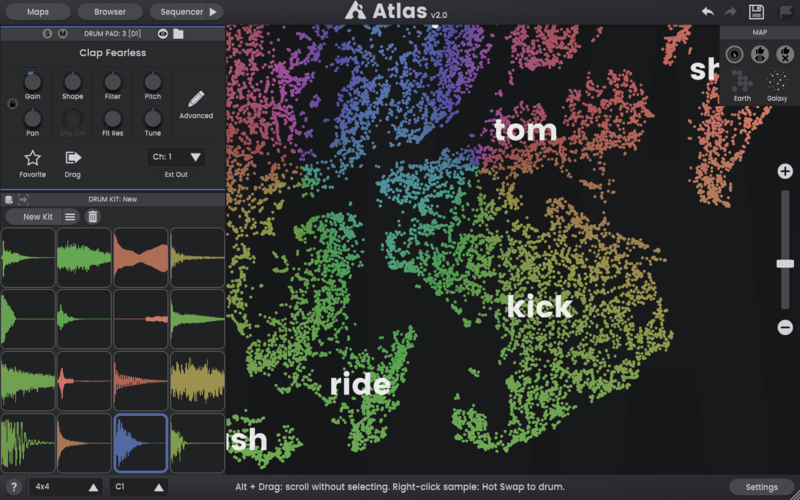
Sample overload can be a real creative bottleneck, changing how quickly ideas come together, how decisions are made and how variation is introduced into your tracks. Modern sample browsing tools are using machine learning algorithms to scan your library and “cluster” together samples that share commonality in musical fields like time, pitch, timbre, rhythm and loudness. These tools then plot your samples into a 2D space where the distance between samples represents their similarity.
Loopcloud’s Audio Filters
Loopcloud features native sample sorting, with an extensive tagging system and the wonderful Audio Filters section which helps you get to the sounds you need quicker than ever. Being able to filter qualities such as tone, length, swing and rhythmic density gives you a great head start in selecting the right samples before you’ve even thought about sorting them!
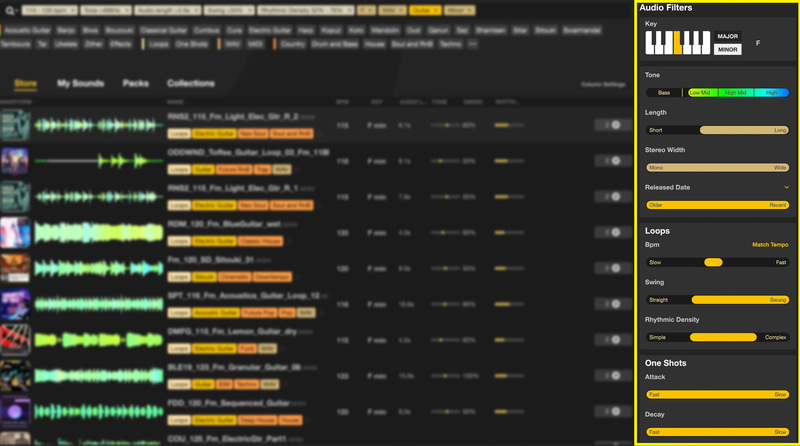
This process eliminates the need to endlessly dig through folders trying to find the right sound, giving you as the producer faster decision making, less ear fatigue and in turn more creative momentum. Finding your samples in this way eases the process of idea generation and enables quick variation without breaking your flow.
Like the idea of utilising samples you didn’t even know you had? As these tools become more popular, it’s likely just a matter of time before we see native integration of these systems into the DAW for even greater sample discovery.
Conclusion
Sampling is still a huge part of many different workflows – it's not going anywhere, but the landscape is changing.
Moving towards controlled chaos engines, complex deconstruction systems and AI-led sample sorting means moving towards a different type of creative control, providing a wider perspective of creative possibility, with the presentation of ideas that might have been hard to find through human tweaking alone.
Whilst technology takes a load off the tedious nature of sample based work, we find creative space in other areas for more detailed experimentation, greater capacity for expressing ourselves, and workflows that reduce friction and keep us in flow.
Keep Ideas Moving
Try Loopcloud free for 14 days. Cancel anytime.

Import your existing sounds · Works with your existing DAW · Setup in under 2 minutes