

Blog
Why Chus & Ceballos Start With Percussion
4 Aug '2026
Chus & Ceballos explain how Loopcloud shaped the percussion, vocal, and focused sample selection behind their new 2026 reunion recording, “Somos Uno.”

Chus & Ceballos returned in early 2026 after a five-year hiatus, and “Somos Uno” provides the first original release from their reunion. The single reconnects the duo with the percussion-led Iberican sound they established across nearly three decades, while its Afro-Cuban congas, Candombe drums, and Spanish vocal place that identity within current Latin house music.
Its message of unity also reflects their decision to record together again after following separate paths.
That return placed extra importance on choosing the right source material.
“Somos Uno” began with three elements that established its entire direction: a live Afro-Cuban conga loop, a Candombe drum ensemble, and a vocal centered on unity. Chus & Ceballos then built the arrangement around those selections, using tension, space, fills, processing, and programmed drum hits to develop the record without crowding its central ideas (much like the sample-choosing philosophies of Mitch Oliver, whom we interviewed last week).
In this interview, the Stereo Productions founders explain how they selected and placed those sounds, why live percussion remains central to their work, and how Loopcloud helps them manage a large sample collection. Their process includes automatic sample analysis, key-locked searching, Favorites, and custom Collections, which help them audition relevant material inside one application and commit to sounds earlier.
Interview With Chus & Ceballos
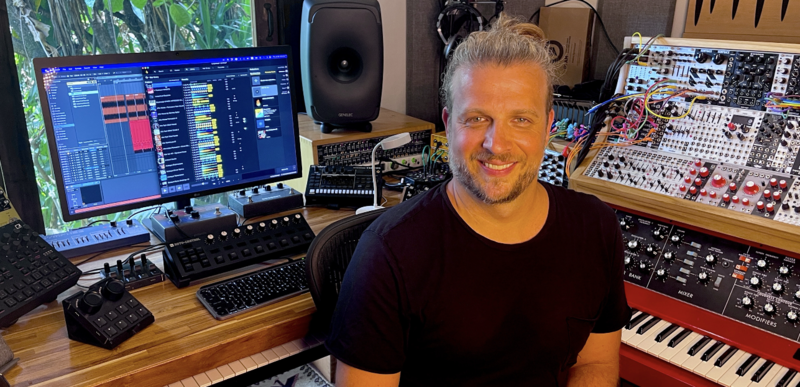
When you started working on “Somos Uno,” what was the first sample or recorded element that gave the track its direction?
The track came together from three key elements.
First, the live Afro-Cuban conga loop. Second, the Candombe drum ensemble in the background acts as the glue between all the other percussion elements. It moves the track forward, giving it that groove and character. Third, the main Spanish vocal carries the message of unity. The idea came during a sleepless night at 4 a.m., when we felt that these three elements belonged together. Once we placed them side by side, we knew the combination worked.
Percussion carries much of the record. What do you listen for when deciding whether a percussion sample has the right tone for a Chus & Ceballos track?
Groove and percussion have been staples of our productions and DJ sets since day one. The groove is the body of the track. It carries the energy and power that make you dance. We aim for a balance between swing, energy, and drive, and we choose each element with those qualities in mind.
Live percussion recordings often provide an organic, human feel that is difficult to achieve with programmed drums alone. That is why we record regularly with experienced percussionists. We also believe percussion should have a hook, similar to a melodic element, which gives the listener something physical and memorable to follow. Variations and fills can then keep the track interesting and introduce surprise.
Those live percussion grooves, layered with programmed drum elements and individual hits, create our signature groove.
Do you prefer samples that already have plenty of character, or simpler recordings that leave you room to process them?
We usually start with something that inspires us, often a live percussion groove from one of our recording dates or an unprocessed loop from a sample library. That provides the starting point. We build the remaining layers over it using processed individual samples and drum hits.
Processes such as parallel compression and harmonic distortion are essential when we want extra punch. That work is easier when the source material remains unprocessed because it leaves room to shape the sound. We therefore prefer a raw foundation with plenty of character, followed by simpler elements that we can process ourselves.
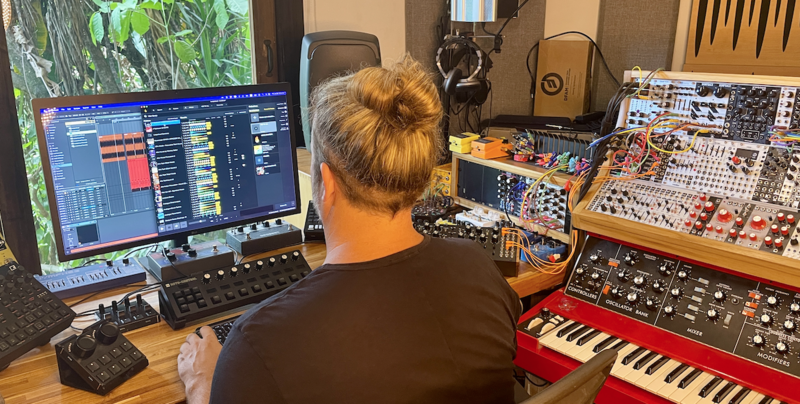
For producers using Loopcloud, what is an effective way to narrow a large sample search without spending time auditioning sounds that do not fit?
In our opinion, Loopcloud is one of the best and most effective options for finding the specific samples a production needs. A good approach is to keep and analyze all your samples and loops in your Loopcloud library. You can then find the sample type you need without moving between applications or storage locations.
Loopcloud’s algorithm labels sample types so accurately that we rarely need to make corrections. When searching for melodic elements or effects, you can also lock the search to the key of your song, which keeps everything you audition in scale.
Whenever we explore a new sample library, we mark the sounds we like as Favorites within the application. We begin later searches with those Favorites, then broaden the search if they do not contain what we need. We also use Loopcloud Collections when gathering sounds for a specific track, along with custom folders such as “Track Starters,” where we save samples capable of establishing an entire production.
The vocal in “Somos Uno” carries much of the track’s message. What made that recording right for the record, and how did you place it without interrupting the groove?

Tension, release, and space are essential in house music, and that informed our placement of the vocal. We built considerable tension with the drums leading into the main breakdown. We then opened the arrangement and left minimal drums, giving the track room after that pressure and creating space for the vocal.
The vocal enters unexpectedly because the record remains almost entirely instrumental for nearly half its duration, with the drums carrying the arrangement. It resolves that tension, then the drop returns in a reduced form with kick, bass, and a few unexpected sounds. That contrast made the recording right for the track. Its message of unity lands at the exact point of release.
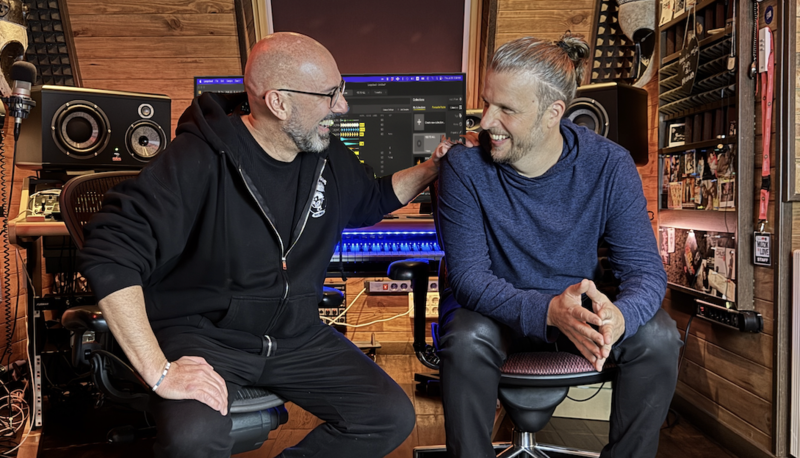
After returning to the studio together, did you notice any differences in how each of you searches for samples or decides which sounds belong in a Chus & Ceballos production?
Experience plays a major role in music production, and our years of working together have taught us how important it is to choose suitable samples and elements from the beginning. We keep each production as simple as possible so every element performs a defined role without causing mud or adding unnecessary layers.
Less is more.
When the samples and musical elements are chosen carefully, mixing and mastering become easier. We share that approach completely, so returning to the studio confirmed how closely our decisions match. Each track presents a different set of needs, although we agree on choosing carefully and maintaining an uncluttered production from the start.
The Biggest Lesson From Chus & Ceballos?
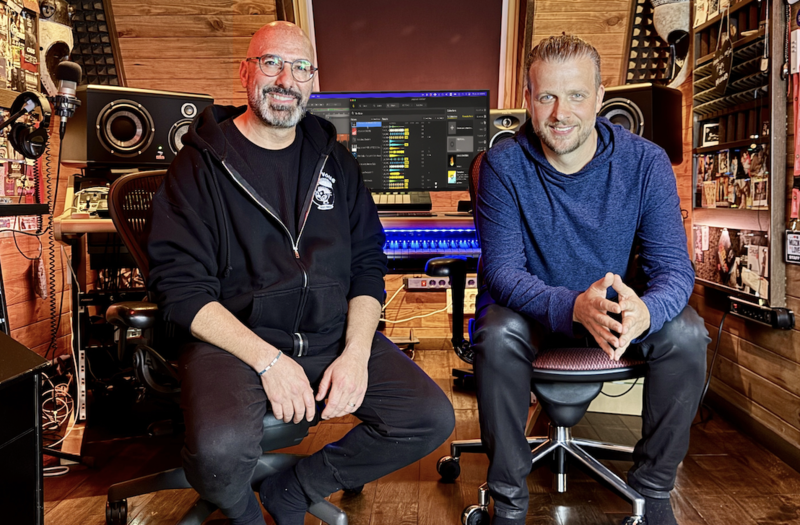
The central lesson from “Somos Uno” concerns selection. Chus & Ceballos did not begin by filling the arrangement with layers. They found a conga loop, a Candombe ensemble, and a vocal that established the record’s rhythm, cultural identity, and message, then gave each element enough space to perform a defined role. Processing came later, once the source material and arrangement had already established the direction.
Loopcloud supports that approach by reducing the time between identifying a need and auditioning a suitable sound.
Automatic tagging narrows large collections, key matching keeps melodic searches relevant, and Favorites and Collections preserve promising material for later productions. Instead of searching disconnected folders or repeatedly auditioning unsuitable files, producers can compare relevant options inside the context of the song and commit earlier, which leaves additional time for arrangement, recording, and mixing. Don't believe us? Try for yourself with a 14-day free trial of Loopcloud right here.