

Blog
5Pin Media on 15 Years of MIDI, Sound Design and the Evolution of Minimal
14 Mar '2026
Less gear, more groove: 5Pin Media on 15 years of sound design done right.
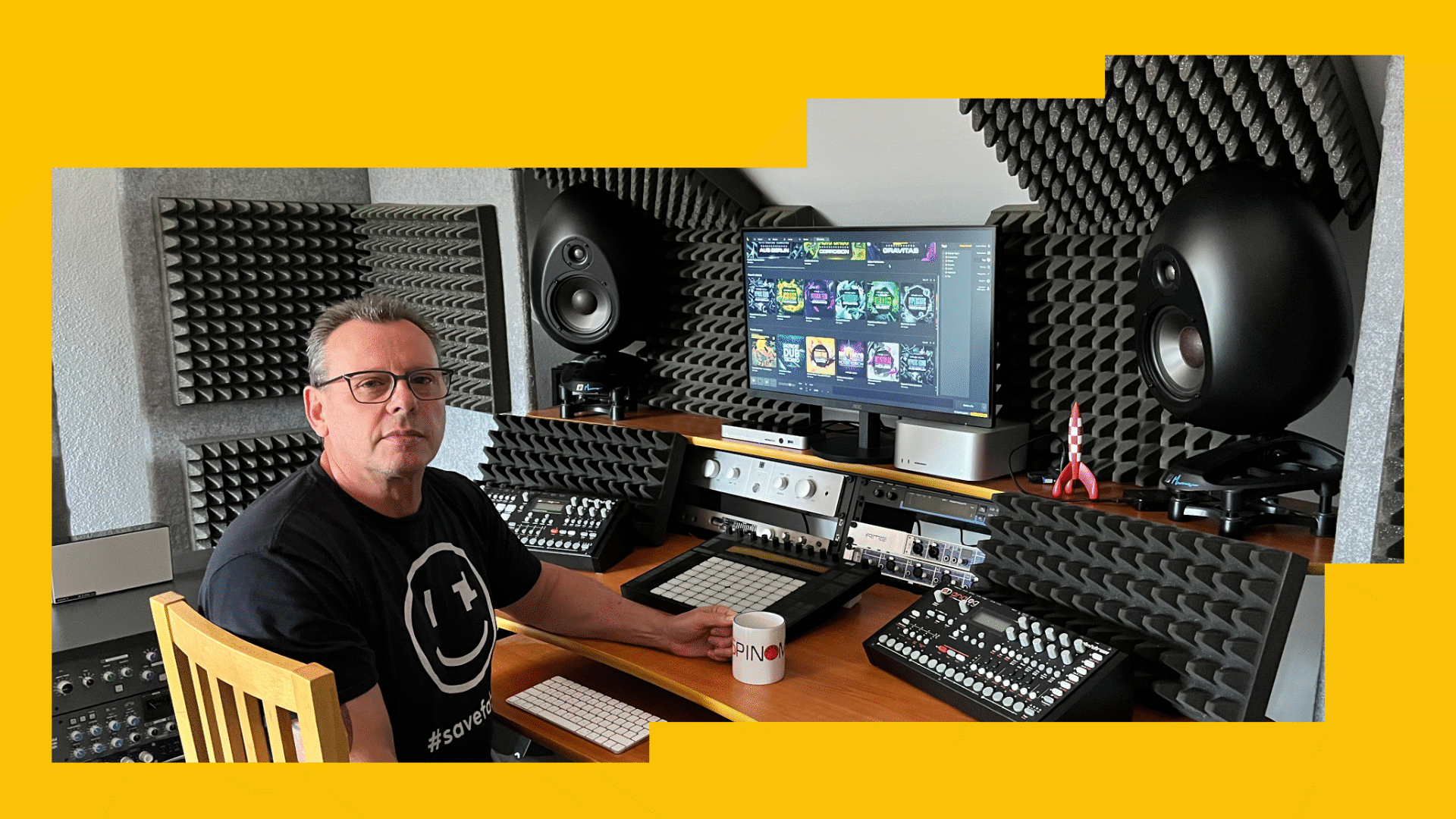
Since 2010, 5Pin Media have partnered with Loopmasters to release sample packs across many genres from Minimal Techno to Drum and Bass.
From the very beginning, MIDI has been at the core of what 5Pin Media does. They were the first label on Loopmasters to pair MIDI files with each sample pack, setting out to prove that MIDI and sound design aren't separate disciplines, but two halves of the same idea.
We ‘pinned down’ founder Mark Nel to talk through the label’s origins, the discipline of building rich sounds even from stock DAW instruments, the changing relationship producers have with MIDI, and how a genre like Minimal Tech evolves without losing what makes it work.
A lot of producers chase the latest plugin. What’s your philosophy on sound design?
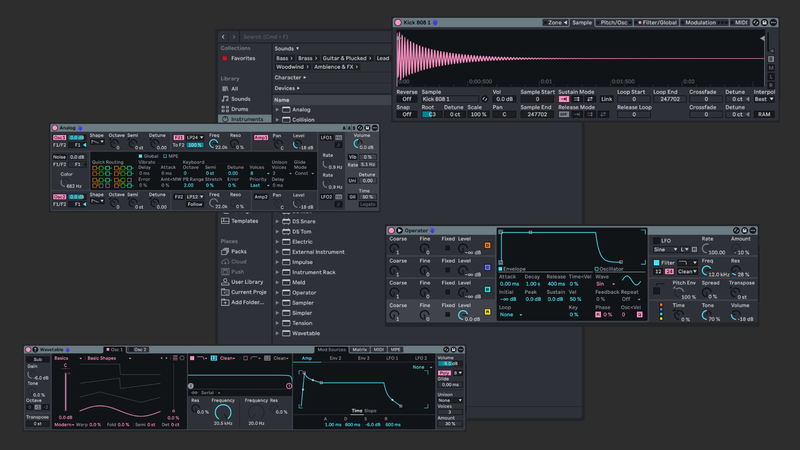
One of the points a lot of people overlook is that you really don't need the fancy new synth of the day. I’ve learned to use Operator, Analog, Wavetable and Sampler (Ableton’s built in instruments), and to be completely candid, they are really high quality. You just have to learn how to use them properly.
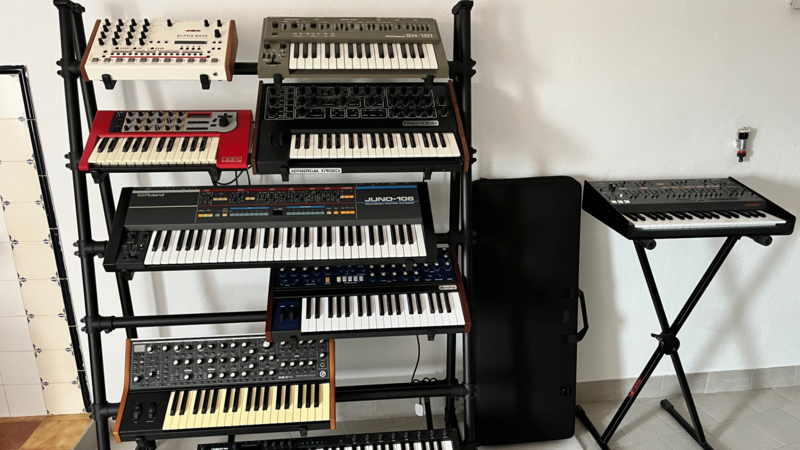
The Live 11 Suite introduction of modulators such as LFO made up for the lonely single LFO in Operator for example and had a profound impact on what was possible to achieve with the stock instruments. I do also use a lot of hardware – vintage and modern – mainly for the enjoyment from making sounds, pushing buttons and twisting knobs. Amongst my favourites are the Pro-One, Juno-106, Analog Rytm and Sub 37 Tribute….too many to mention!
Do you have any advice for producers who want to get better at sound design?
Give yourself small exercises. Take a sound you like and try to recreate it, break it down to understand it. Over the years I’ve made a lot of percussive sounds, everything from kicks to snares. The approach is to take a real-world sound and break it down into its elements: for a snare, that's the body and tone, the snares that give it a ring and the transient of the skin itself. Once you separate a sound into its individual components, you can approach synthesis the same way.
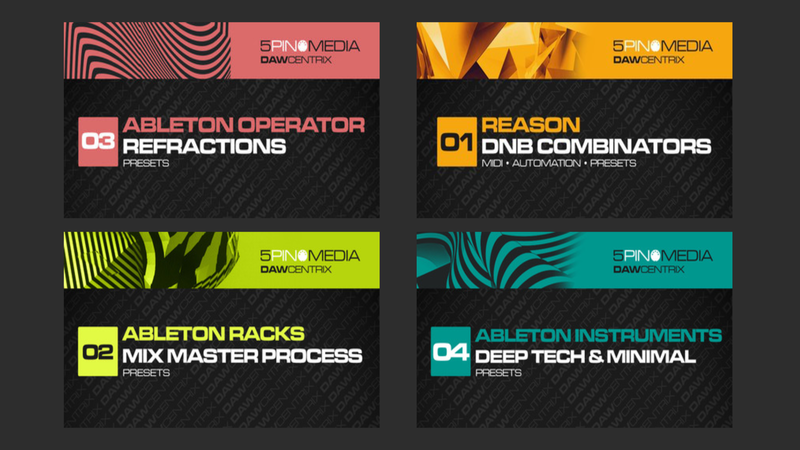
When I was working on the DAWcentrix packs I released through 5Pin Media, I’d take that process further. I once listened to an 808 cowbell, recorded its frequency spectrum and studied the harmonics to work out how to recreate it using additive synthesis. I got close enough so that only a really trained ear might tell the difference, but when it’s in the mix it reads as an 808 cowbell.
What you’ll find is that you get 80% of the way there fairly quickly, but that first 80% is only about 20% of achieving the final goal. The last 20% is where the real work is.
As the years go on, how has the industry’s attitude towards MIDI changed?
I’d say producers have warmed to it more and more. In the early days of selling samples on CD, everything was about drum loops and grooves; people tended to work with audio, and slicing was the order of the day.
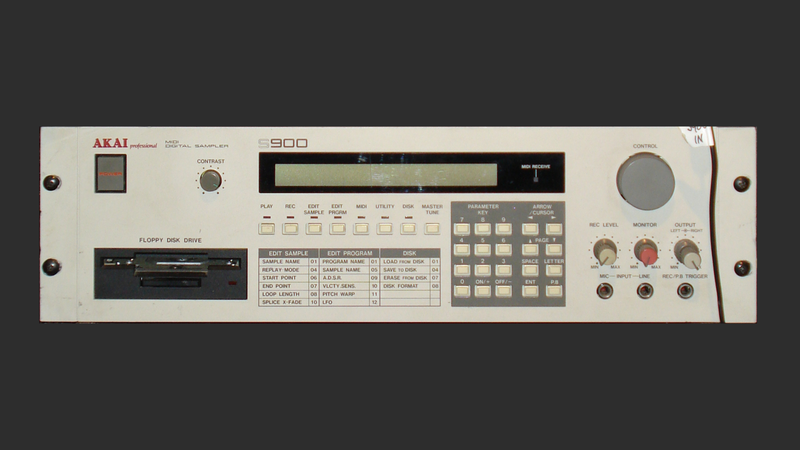
Go even further back and producers were working with AKAI S950s for example, a sampler that was limited by the available memory of the time. Things like that can teach you how to achieve something with less. That’s another problem these days: people have too many options, too much power. Back then, you sometimes had to loop a sample and manage its decay manually, and that taught you about envelopes and tricks you’d never learn otherwise.
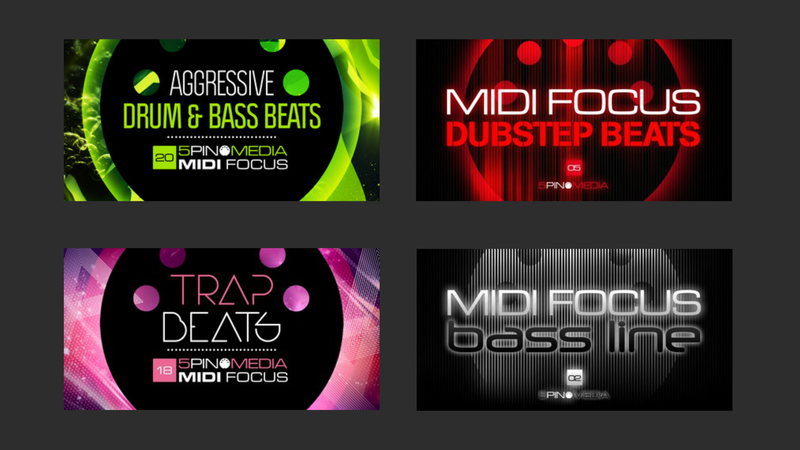
Over the last six-plus years we’ve included MIDI with our packs, but I want to go back to doing MIDI-focused releases properly, especially for beats and drum programming, like the drum & bass packs we’ve done. That requires real skill; knowing how to use MIDI in conjunction with the sounds, when to use envelopes, not just one-shot trigger mode. Otherwise everything just becomes a soupy mess.
Another major development is, of course, MPE, which really opens up the door for more advanced MIDI files.
Your first release under the label was Minimal Tech Volume One. How has the genre changed since then?
Minimal now is different to what Minimal was when we released Minimal Tech Volume One. Like any genre, it’s evolved. There’s always cross pollination between styles and shifting trends. I come from an era where a lot of my vinyl collection is New-School Breaks, Tech Funk and London Tech House from artists like Layo & Bushwacka, Eddie Richards, Nathan Coles and Terry Francis; the kind of Tech House I used to play on decks. That, to me, is Tech House. It has a distinctive character and strong groove.
What gets called Tech House now is closer to Electro House: lots of buzzing, loads of in-your-face sounds. That was never really what Tech House was about, although that’s a matter of opinion. Minimal has genuinely evolved, and mostly in a good way. Producers like Boris Brejcha built a high-Tech Minimal sound, but you can still hear techniques borrowed from the early 2010s scene running through it.
The core principles haven’t changed: small changes, subtle shifts and plenty of space. The music breathes. A good Minimal or Deep Tech track has real depth to it; on a proper set of monitors, you get a genuine front-to-back, three-dimensional sound, with some elements sitting forward and brighter, with others sitting further back. Compare that to a modern Tech House track, where the hi-hats, synths and wide mixing all hit you at once. That works in a club on a dancefloor, and I understand the appeal, but most good Minimal works on a commute too, it can be almost ambient and still translate to a club setting. That’s often where a producer's alternate club mix comes in.
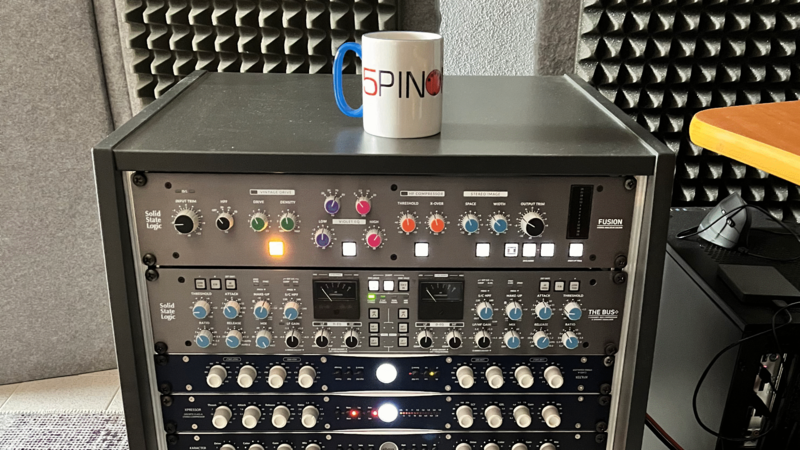
Also we shouldn’t overlook the emergence of sub-genres like Rominimal, Minimal House and Micro House. These reinforce the impact Minimal Tech has had and ensures that it remains relevant in a Tech House-dominated world.
What separates a good Minimal producer from a great one?
It comes down to attention to detail and small changes; making elements work together to hold the listener’s interest. If I’m listening to a track and it’s just the same loop running unchanged for eight bars, that’s a problem. It doesn’t need a big moment; even a small sound appearing at the end of an eight bar phrase is enough to make me go ‘Oh wow, that was good”.
That’s what I look for: being very deft at holding the listeners attention whilst also creating a groove. That groove is so important in this style, it doesn’t always need swing, though something like 67-70% MPC template feels great. The groove itself is what the music is about. It’s hypnotic, it’s groove based.
Who are some of the artists who’ve shaped your approach to sound design?
If I think back, one of my favourite artists was Minilogue. It was all about the sounds they used, the little leads and the layers. Some people would think it’s quite basic, but when you peel it back, there are a lot of layers in there.
Another artist that I really enjoy is duo SCSI-9 originally from Moscow, now mainly based in Berlin. They were active in the early 2000s and whom I consider the pioneers of the deeper side of the genre and still releasing music. A lot of Minimal producers post 2010 were influenced by their use of micro-sounds and “3D” technique of sound processing.
Any specific Techniques for mixing and arrangement that are particular to this style?
Change is important, but use it sparingly. You can have sections with big reverb, but save that treatment mainly for build-ups. In Minimal, big reverb and white noise are reserved for those occasional special moments; the drops and the builds, rather than some other styles of music where it’s often just all big and producers throw the kitchen sink at it. The track should still breathe even while it’s building tension. It’s about using subtle changes and effects to create tension and not overwhelm a mix. Messing with the pitch by means of modulation and a lead part’s envelope also works, experimentation is key.
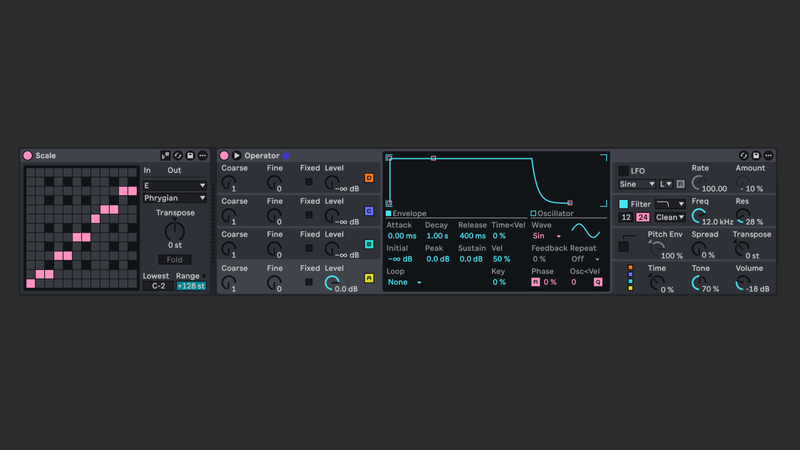
My main tip is not limiting yourself to traditional western scales. Phrygian is a popular choice in Techno, an obvious one, but you don’t have to always play it in E. Nobody says you have to work in a traditional major or minor key or even 12 tone equal temperament. A good example to study is Aphex Twin.
Get the Bundle
To celebrate 15 years of MIDI, sound design and everything Minimal, 5pin Media’s entire catalog is 50% off at Loopmasters from the 15th to 23rd of September. It’s the perfect chance to dig into the packs, presets and MIDI files discussed above. On top of all that, from the 17th of September the sale welcomes a brand new release; Deep Tech - The Underground. Save 50% on 5Pin Media now!