


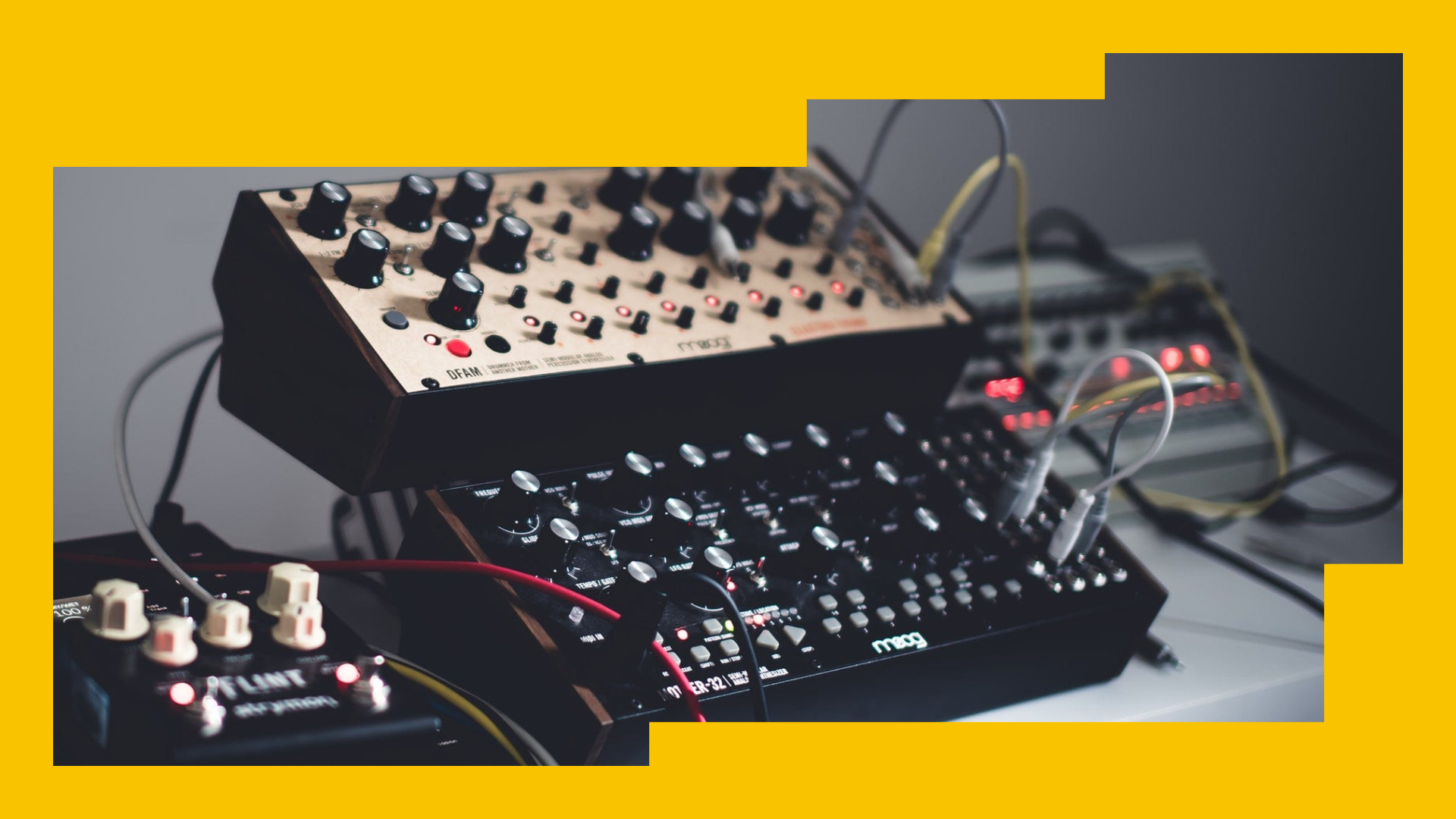
Meet the Legendary Tools That Started Whole Genres
From the 60s, all the way through to today, discover the tools that defined the sound of genres, and the artists that used them
Like there are some songs that “are just a hit”, there are some musical instruments and tools that simply inspire a whole generation of musicians – the instruments that came in at the right place and at the right time, and changed musical history almost on their own.
From the crackle of RC-20 to the squelch of a TB-303, the history of music in the last 70 years is arguably as much about the tools used to make it as it is about the people creating the songs themselves! In this article, we explore the instruments and plugins that shaped and created genres, tracing their origins, the artists who used them, and their lasting legacy.
Moog Minimoog (1969)
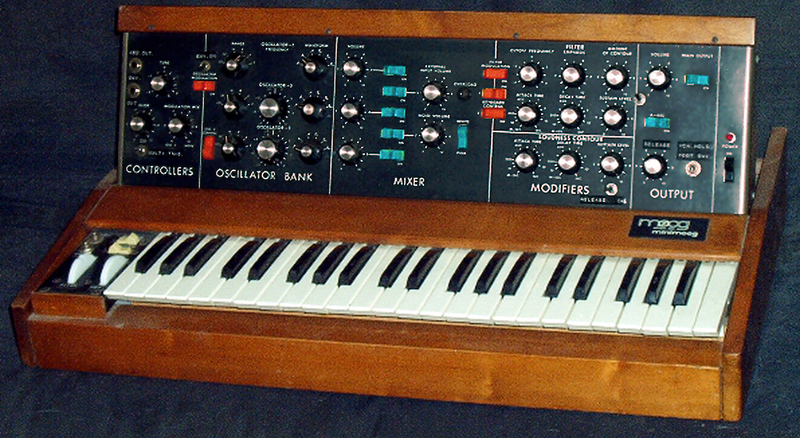
Don’t let the name fool you. Though small in stature, the Moog Minimoog has had an outsized impact on electronic music.
Moog engineers Bill Hemsath and Chad Hunt built the first Minimoog prototype in 1969. Dubbed the “Min A,” it was assembled from discarded Moog Modular components in the Moog factory, hard-wired into the now-distinctive signal flow that countless synths have since emulated. It wasn’t until the second prototype, the Model B, that Moog’s business manager John Huzar gave the instrument its now-iconic name.
The first production Minimoog shipped on November 19, 1970, and it quickly became the first true classic synthesiser. What set it apart was its portability. With a fold-down panel that reduced its height to just 5.5 inches, it was a blessing for touring musicians spending long stretches on the road.
Unsurprisingly, the Minimoog was embraced by many of the most influential artists of the ’70s and ’80s. It became a staple of prog rock, with acts such as Kraftwerk, Tangerine Dream, Gary Numan, Stevie Wonder, ABBA, and Giorgio Moroder all using the Minimoog on stage and in the studio.
Rhodes Piano (1965)
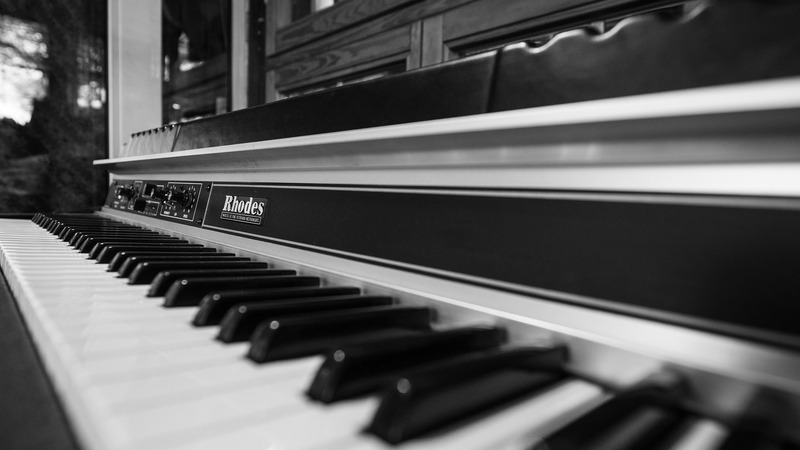
Harold Rhodes was a successful piano teacher who served in the US Army Air Corps during World War II. During his service, he developed a portable lap piano built from old bomber parts, which he played for wounded servicemen as a form of therapy.
After the war, he founded the Rhodes Piano Corporation and continued refining his design. A partnership with Fender followed, and in 1965, the Fender Rhodes Mark I was released.
This electric piano used metal tines instead of strings and relied on amplification, producing its distinctive smooth, bell-like tone. Notable players included Ray Manzarek of The Doors, along with Stevie Wonder and Herbie Hancock. The Rhodes would go on to define the sound of jazz, funk, and rock for decades – and remains popular today.
Part of what made the Rhodes so special was its dynamic range. It could sound soft and intimate or gritty and aggressive, and its stereo tremolo added a warm, emotive movement that became instantly recognisable.
Roland 808, 909 and 303 (1980 - 1983)
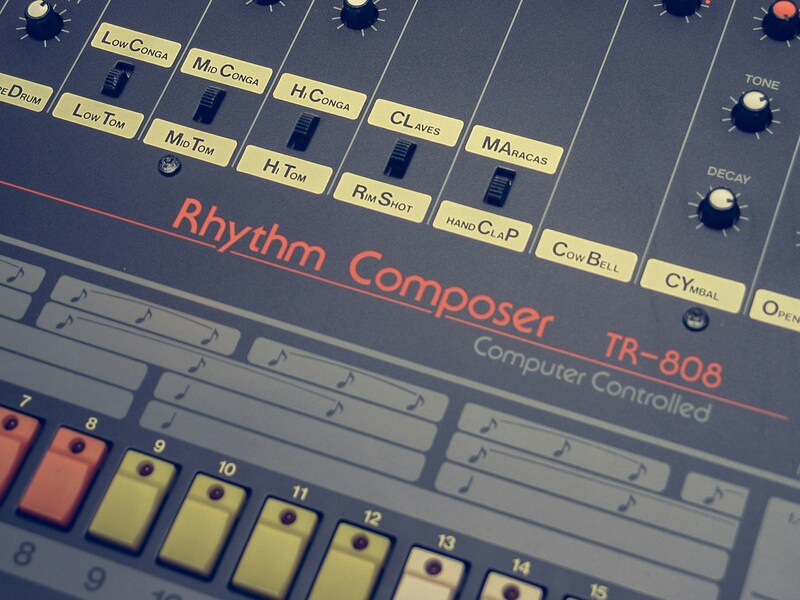
Photo by Steve Harvey on Unsplash
It’s impressive for an audio company to create one tool that changes music forever; it’s remarkable to create three. Between 1980 and 1983, Roland released the Roland TR-808, Roland TR-909, and Roland TB-303 – each of which would go on to define entire genres. Ironically, all three were commercial flops at launch.
The TR-808 Rhythm Composer arrived in 1980. Unlike competitors such as the Linn LM-1, it used analogue synthesis rather than samples, resulting in its booming bass drum and snappy handclap. Though initially overlooked by producers seeking more “realistic” drum sounds, the 808 was embraced by hip-hop artists and helped shape the genre’s sonic identity, entering the mainstream with tracks like Planet Rock by Afrika Bambaataa.
Next came the TB-303 in 1981. Marketed as a substitute for a bass guitar, it failed to find immediate success. That changed when producers like DJ Pierre and Phuture pushed its filter and resonance beyond “natural” bass tones, creating the now-iconic squelching acid sound. By the late ’80s and ’90s, acid house had gone mainstream – and it was all thanks to this little silver box.
The trinity was completed in 1983 with the release of the TR-909. Like the 808, the 909 was a drum machine; unlike the 808, it used a combination of samples and synthesis. Though unpopular on release, the 909 gained traction thanks to dance artists like Jeff Mills and Derrick May), and would become the definitive drum sound of house and techno – and still is.
Though an original 909 is eye-wateringly expensive these days, there are plenty of 909 samples on platforms like Loopcloud, so many artists are still using them to achieve that iconic rave sound.
Here’s our take on Six Classic Drum Machines including the 808 and 909.
Auto-Tune (1997)

Developed by Andy Hildebrand in 1997, Auto-Tune was originally intended to subtly correct out-of-tune vocals. It didn’t take long, however, for artists to “misuse” it in pursuit of the now-iconic robotic vocal effect.
Perhaps unsurprisingly, experimental and electronic music pioneer Aphex Twin was one of the first to experiment with it on his track Funny Little Man.
But, in an unlikely twist in the path of musical history, it would turn out to be Cher who brought the Auto-Tune sound into the mainstream with Believe.
Especially throughout the 2010s, the, Auto-Tune became ubiquitous. It’s deeply embedded in hip-hop and defines the sound of artists like Travis Scott, who pairs it with additional effects to create a psychedelic vocal aesthetic.
Beyond hip hop, Auto-Tune can be found in almost every genre, from indie to country, to pop – its influence is impossible to escape.
Discover more essential vocal tools for producers.
Massive (2006)
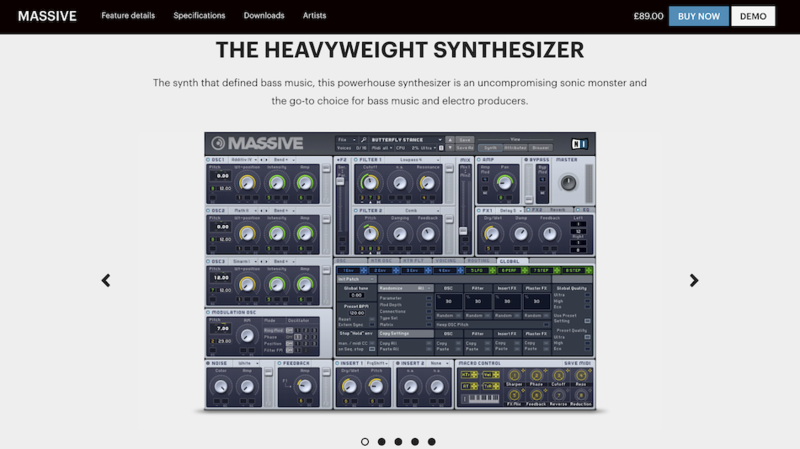
Released in 2006, Massive by Native Instruments was a game-changing soft synth. Its wavetable engine, extensive modulation capabilities, and semi-modular design helped define the sound of bass music.
Massive was CPU-intensive for computers of the time, so early adoption was slow. But once producers realised its potential, it quickly became central to dubstep’s explosive rise, with artists such as Skrillex and Nero) using it and its modulation power to devastating effect.
Although Serum would later challenge its dominance, Massive’s legacy is secure. In many ways, Serum builds on the foundation Massive established, and plenty of producers still prefer Massive’s slightly rougher, less “perfect” character.
RC-20 Retro Color (2016)
Lo-fi hip-hop, or chillhop, dominated much of the online musical landscape in the 2010s. Around-the-clock livestreams and nostalgic visual pairings became hugely popular, particularly during the pandemic.
On the hardware side, the Roland SP-404 MKII was a favourite among producers. But one plugin, in particular, helped define the genre’s signature warmth and wear.
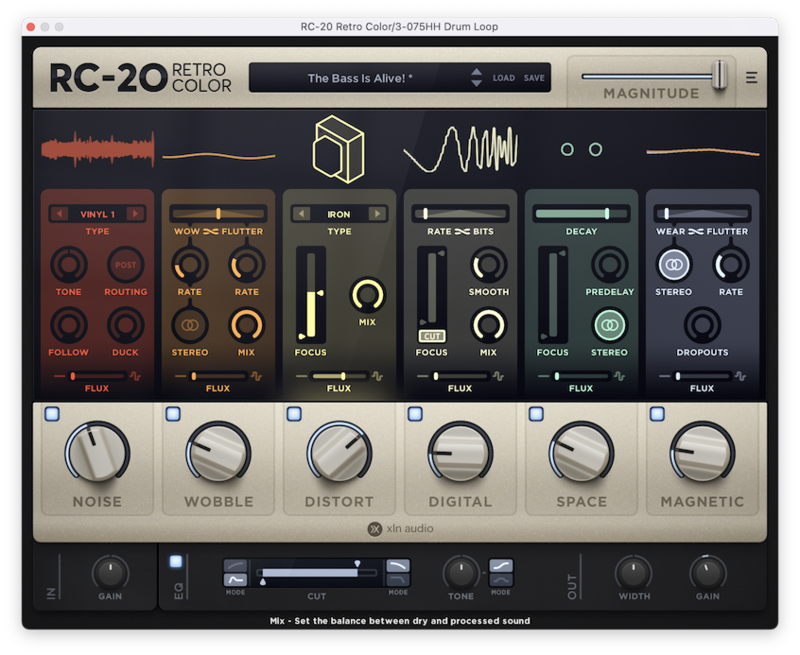
RC-20 Retro Color by XLN Audio is a versatile saturator and vintage gear emulator. Its six lo-fi effect modules can be reordered, offering deep control and making it easy to infuse any sound with the nostalgic character central to lo-fi hip-hop.
Prominent artists in the lo-fi community like Tomppabeats, j'san and Philanthrope have all discussed how RC-20 is an essential part of their workflow. So, the next time you put on some Beats To Relax/Study To, the chances are you’re hearing RC-20 in action!
Ready to work more effectively in the studio? Discover The 80/20 Rule as it Applies to Music Producers.
Keep Ideas Moving
Try Loopcloud free for 14 days. Cancel anytime.

Import your existing sounds · Works with your existing DAW · Setup in under 2 minutes