

Blog
6 Classic Drum Machines Every Producer Should Know
15 Dec '2025
The foundations of modern electronic music. Drum machines shaped the sound of multiple scenes. Each one brought a different flavour, and distinctive sound that changed the musical landscape
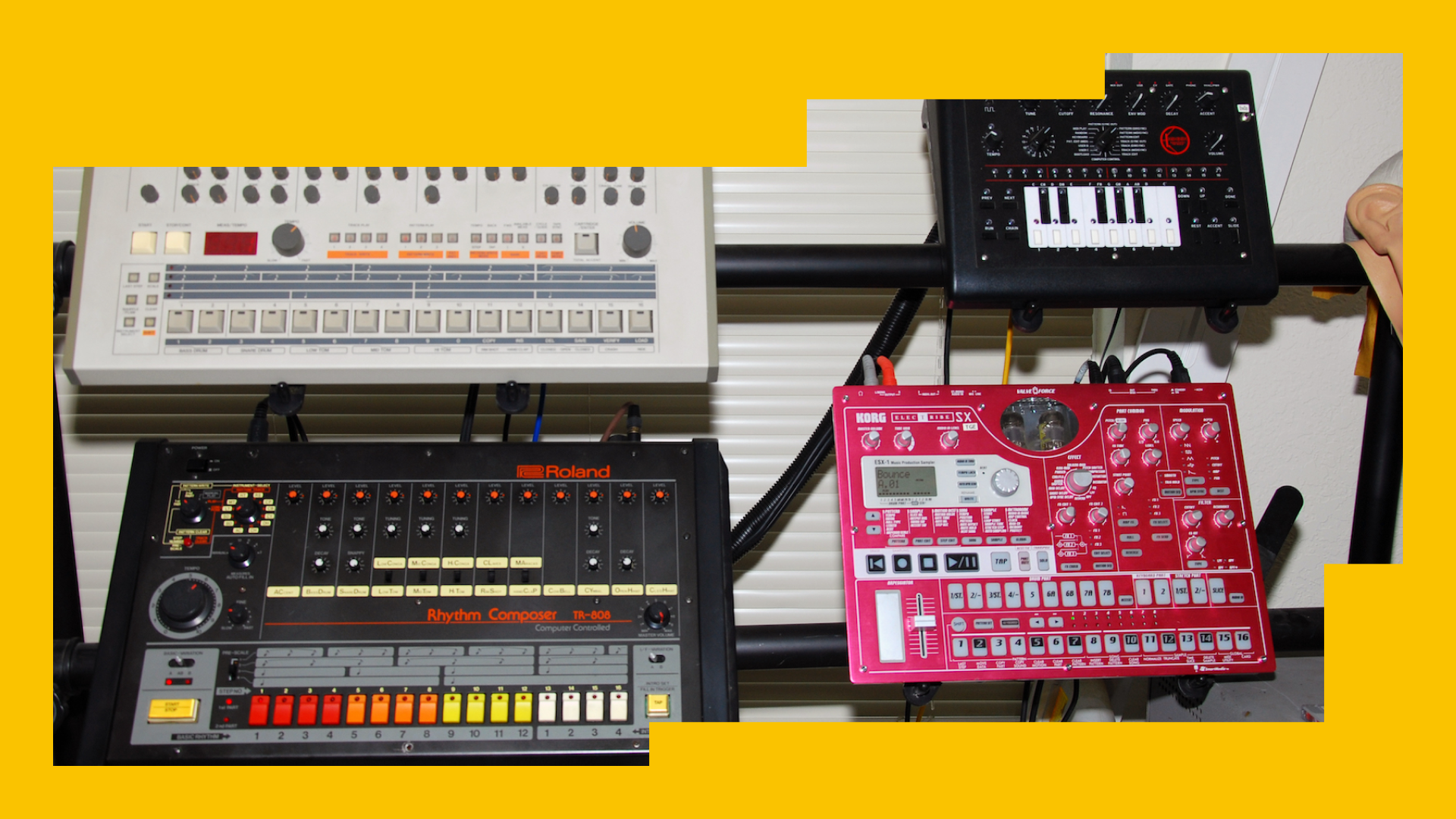
Cover photo: Brandon Daniel via Wikimedia Commons
Originally, drum machines were created as an alternative to a real drummer, or as an electronic accompaniment. Artists could use the machines to program and play back their own drum patterns. They gave the opportunity for musicians that couldn’t afford expensive studios to have their own ‘band’, or create rough demos that could be filled out later. But they quickly became much more than that, opening the doors to new sounds, techniques, and genres.
Today, drum machines are a regular part of many producers’ working practices, now living virtually in DAWs as VST plugins. Many of today’s virtual drum machines are actually based on those same classic hardware units from the past.
In this article, we’ll recap six of the must-know hardware drum machines of years gone by, which are still making an impression on the musical styles of today. When you’re done here, check out 6 Drum Mixing Tips with Loopcloud DRUM, and 7 Drum Programming Tips to Improve Any Groove.
The LinnDrum (1982)
Current secondhand price: £5000
The LinnDrum was created by Roger Linn, a musician with a passion for technology and programming.
Linn saw the need for a drum machine that had acoustic hits, instead of those that were analog synthesized, and were customizable, when working with Leon Russell of The Wrecking Crew.
Linn’s first creation was the LM-1, which had a bigger price tag and less functions than the famous LM-2 or LinnDrum.
Released in 1982, the LinnDrum redefined what a drum machine could do. Unlike most previous drum machines, it could store digital acoustic samples that could also be individually customized. Linn overcame a big problem drum machine manufacturers were having when trying to use samples of acoustic drums: memory. He did this by only storing the individual hits, not loops, in his machine. Most other drum machines at the time used analogue synthesis to create their sounds. Artists could also create and save their own drum patterns, instead of choosing from presets built into the machine. Artists could make high-quality tracks, without needing to use a studio.
The LinnDrum was cheaper than the LM-1. It had 15 sounds, which included a new addition of crash and cymbal hits. Each hit could be customized, and importantly, swing could be added to patterns, making them sound more like a live drummer.
The LM-1 was featured in some of the 80s’ most iconic tracks: Don’t You Want Me by the Human League, which made the Billboard Hot 100. a-ha’s Take On Me used the LinnDrum, as did Holding Out For A Hero by Bonnie Tyler, and perhaps most notably, Prince, on many of his songs including When Doves Cry.
The LinnDrum changed how music was made. It was used on countless tracks in the 80s and could be found all over the charts. And its influence can still be heard today. DAWs even include features that were first found on it, and some producers include the original as part of their studio setups.
Simmons SDS-V (1981)
Current secondhand price: £4000
The Simmons SDS-V was the world’s first fully electronic drum set. Designed by Dave Simmons and Richard James Burgess, it was released in 1981. For playing hardware, it made use of iconic hexagonal drum pads, connected to a modular analogue synth unit. This drum kit became an icon of the era, used by artists throughout the decade, and was all over the charts, and television.
The Simmons SDS-V consisted of touch-sensitive pads connected to a modular analog synth, with each pad triggering a separate, customizable drum hit. The synth had five modules: kick, snare, and three toms. You could change the character of these individual elements, with the option to change the tone, noise amount, decay and other characteristics of each hit.
It was used by numerous bands of the time, including Duran Duran, Prince, and many more.
The Simmons SDS-V was synonymous with the 80’s, used by bands across the charts, and was seen in images and television. With its distinct sound, customization features, and iconic pads. It offered a modern alternative or accompaniment to an acoustic drum kit.
Akai MPC-60 (1988)
Current secondhand price: £2500
Released in 1988, a collaboration between Akai and Roger Linn (Of LinnDrum fame). The Akai MPC-60 was a gamechanger for the world of music production, and live performance. Offering a customizable sequencer and sampler, all in one unit. Which meant that musicians could make entire, quality tracks, all in one place. Plus, it was affordable and easy to use.
MPC originally stood for MIDI Production Centre, in reference to its MIDI capabilities, but this was later changed to Music Production Centre, to reflect its all encompassing nature. It allowed users to sequence and customize built-in drums, and their own samples. Including adding its famous swing. The original machine came with 16 square, velocity sensitive pads, 128 pre-loaded sounds, 13.1 seconds of sampling time, 16 MIDI channels, and more.
Tracks made using the MPC-60 include Regulate by Warren G. ft Nate Dogg, all of DJ Shadow’s album Endtroducing, And many, many artists across multiple genres have used it including A Guy Called Gerald and J Dilla.
The MPC-60 is synonymous with Hip-Hop, Rap and even House. Its iconic 4x4 pads, and famous swing have been used by countless beatmakers. Today modern MPCs are still used by many artists. And its legendary swing settings are used throughout music production tools, including in Ableton’s Groove Pool.
Oberheim DMX (1980)
Current secondhand price: £2500
The Oberheim DMX was one of the first drum machines to use sampled sounds. Released in 1980, it was a popular alternative to other drum machines of the time that used analogue synthesis for a less natural sounding result. It was easy to use, and customizable, with a range of features, and a distinctive tight and punchy sound. It was highly influential in early Hip Hop, but also with huge artists such as Madonna, and Stevie Nicks, and was used across the charts, and multiple genres.
The machine used digital samples of acoustic drums, stored on EPROM (Erasable Programmable Read-Only Memory) chips. You could edit each individual sample – either one of the twenty four included with the machine, or add your own. And once you had programmed your own pattern you could save it in the machine. You could add swing to your patterns to make them sound more realistic, and store songs in the machine.
The Oberheim DMX was used in Run DMC’s It’s Like That, Madonna’s Holiday and Into The Groove, and in many other hits, and genres, across the decade.
The DMX was instrumental in the early Hip-Hop sound, but it was also used by huge Pop artists, and in other genres. Its unique sound, customizability, and ease of use, made it the number one choice for many producers at the time.
Roland TR-808 (1980)
Current secondhand price: £5000
The Roland TR-808 was an analogue drum machine that, at first, didn’t really hit the mark. But once production was stopped and the machines started appearing in second-hand stores at a more affordable price, the unit’s legacy began to build.
The Roland TR-808 was one of the first drum machines that artists could create and save their own patterns on, instead of using presets. But they didn’t sound very realistic, and were expensive. Which led to only 12,000 units being made.
The Roland TR-808 had 16 different sounds, each of which was customizable. Because it was an analog synthesizer this enabled producers to give its sounds unique characteristics that had never been heard before. Most notably weight in the kick drum, but more on that later! The machine offered musicians the flexibility to be creative, and was easy to use.
One of the first tracks that started to give the TR-808 momentum was Afrika Bambaataa & Soulsonic Force’s Planet Rock. It was also used by Marvin Gaye, in Whitney Houston’s I Wanna Dance With Somebody, and by artists across genres past and present, including Daft Punk, Run DMC, and many more.
The TR-808 is a cornerstone of music production as we know it today. It was used in songs across the charts, and amongst upcoming producers that were laying the blueprints for the burgeoning styles of House, Techno, and Hip-Hop. Today, the modern version of the machine and its sounds are used across music. The weighty, low-end kick drum has even taken on an identity of its own with the abbreviation “808”, that even non-producers will probably recognise.
Roland TR-909 (1983)
Current secondhand price: £4500
The TR-808’s predecessor, the Roland TR-909 is the go-to drum kit for Techno and House, even to this day. In a similar story to the TR-808, the 909 was also not a commercial success, and production stopped after 10,000 units. Again, it was after this when the machine started to find its way into second hand stores and became more affordable that its popularity grew. The machine laid the foundations for House and Techno as we know it. And was later used in Breakbeat, Big Beat, and some Pop.
The Roland TR-909 stuck with analog synthesis, mostly. This time adding samples of real hi hats, and cymbals. The 909 brought new effects and updated electronics. Offering a flam, and shuffle effect that was asked for by many producers at the time, and other additional features. It was the first drum machine to have MIDI, which meant that artists could connect it to other units to affect the sound.
Early Techno and House classics such as Rhythim is Rhythim by Strings of Life, Frankie Knuckles’ Your Love (see that one recreated with Loopcloud here), and Inner City’s Big Fun all used the machine. It was later used by Madonna in Vogue and then The Prodigy, Daft Punk, and more.
The TR-909 was the sound of the underground, with pioneers of Detroit Techno and early House laying it into the foundation of the genres. It was the drum machine of choice for most electronic music, and still is today. The machine provided cutting edge sounds, with creative flexibility. And it could be played live, as an instrument.
Did You Know: Loopcloud’s Own Drum Machine Plugin
Tightly integrated with Loopcloud, Loopcloud DRUM offers 16 pads to add your own samples and make your own kits, thanks to our extensive library of over 4 million samples. Or, you can choose one of the pre-made kits designed specifically for the plugin by professional sound designers.